
Glass Surface Protective Film
- Our glass surface protective film is designed to protect a wide range of glass products from scratches, dust, abrasion, stains, and handling damage while maintaining clean removal and stable adhesion.
- Tell us your glass type, surface finish, and processing conditions, and we will recommend a suitable film solution.
- Clean removal
- Stable adhesion
- Custom printing available
- Suitable for multiple glass types
- OEM / ODM supported
Why Glass Surface Need Protective Film?
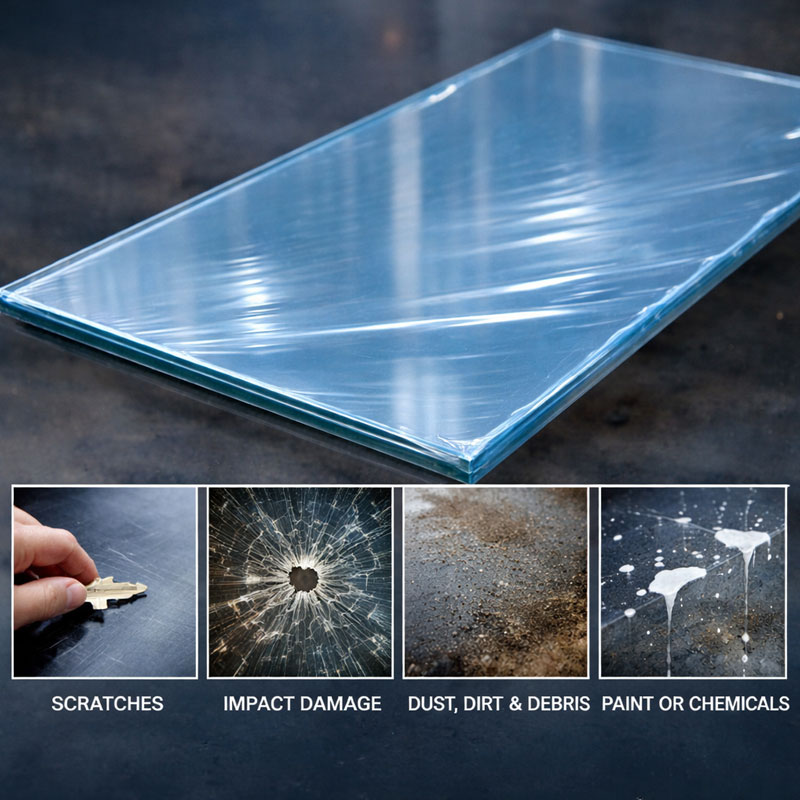
- Glass surfaces are vulnerable throughout the supply chain. Even minor friction, dust, or improper stacking can affect appearance and quality.
- Our protective film helps preserve the final finish and reduce loss caused by surface damage.
1. Prevent Scratches and Abrasion
Glass surfaces can be easily scratched during cutting, stacking, transport, or installation.
2. Reduce Dust and Dirt Contamination
The film acts as a barrier against dust, debris, fingerprints, and light surface pollution.
3. Protect During Processing
It helps protect the surface during edging, bending, lamination, coating, or secondary fabrication.
4. Improve Transport Safety
Protective film minimizes surface damage caused by friction between sheets or contact with packaging materials.
5. Support Easier Installation
It reduces handling marks and keeps the glass cleaner until final installation.
Our Glass Surface Protective Film Specifications
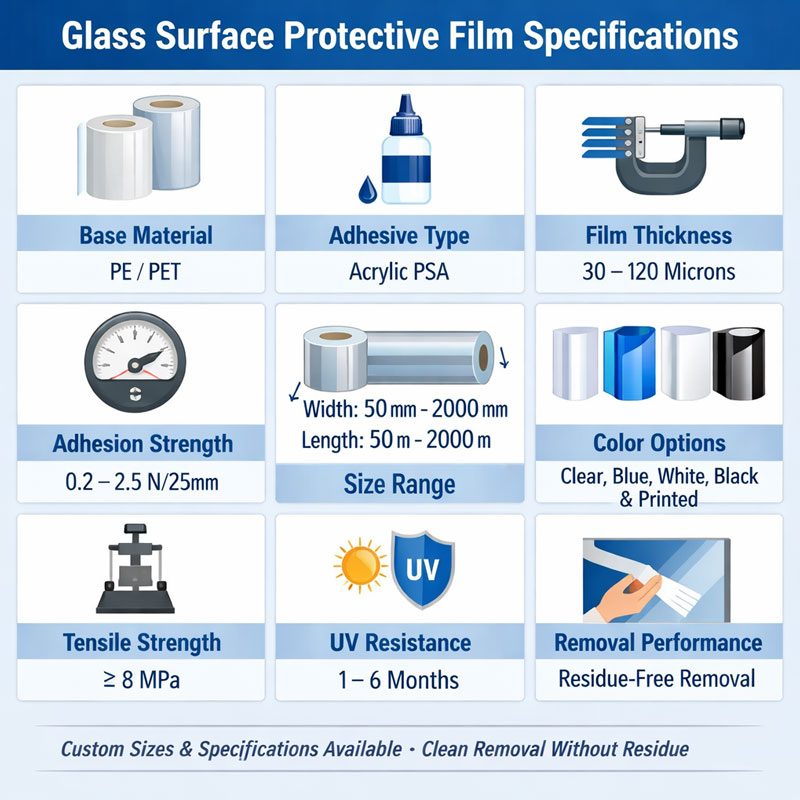
| Parameter | Specification |
|---|---|
| Material | PE / PET |
| Adhesive Type | Pressure-sensitive adhesive |
| Film Thickness | 30 – 120μm or custom thickness |
| Adhesion Strength | 0.2 – 2.5 N/25mm (customizable: low / medium / high tack) |
| Width | 50 mm – 2000 mm |
| Length | Custom |
| Color | Transparent, blue, milky white, black & white, custom printed |
| Surface Compatibility | Smooth glass, coated glass, tempered glass, mirror glass, etc. |
| UV Resistance | 3–12 months |
Glass Surface Treatment
We provide custom protective film solutions for various types of glass with different surface treatments.
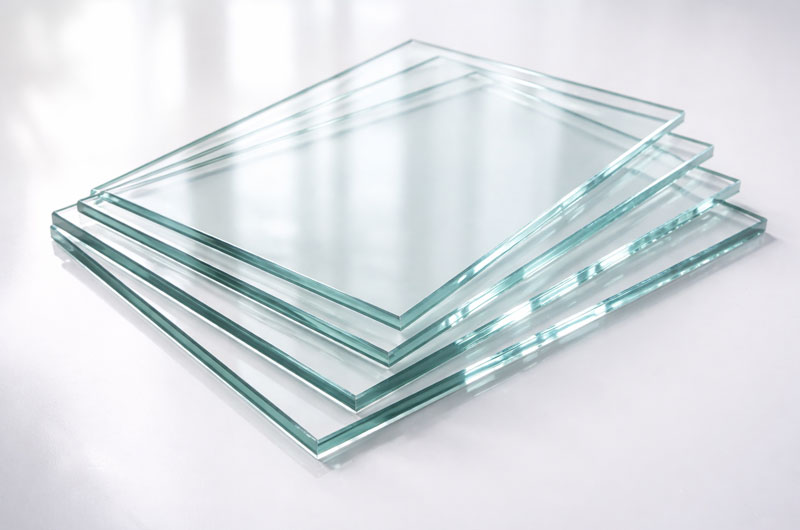
Smooth Surface
- Smooth, non-textured surface.
- Requires medium-high tack PE protective film.
- Adheres evenly; leaves no residue upon removal.
- Suitable for clear float, tempered, and mirror glass.
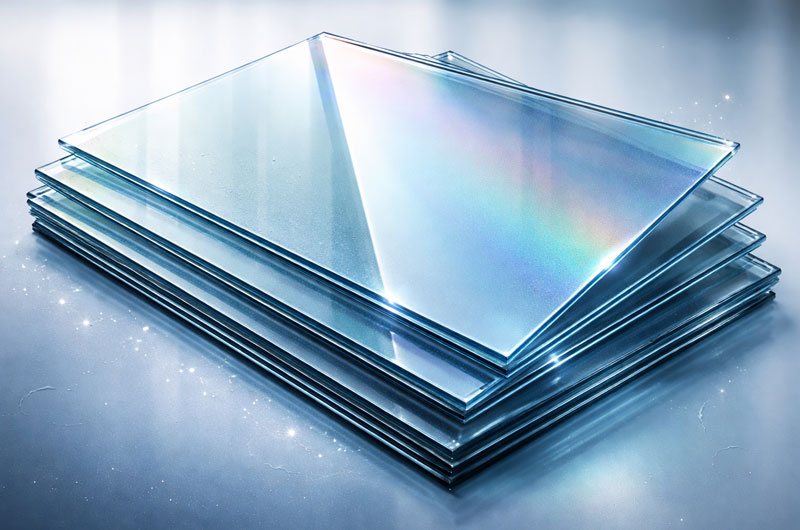
Coated Surface
- Surface with functional coating.
- Must use low-tack or specialized protective film.
- No damaging the coating when removing the film.
- Suitable for low-E, energy-saving, and anti-reflective glass.
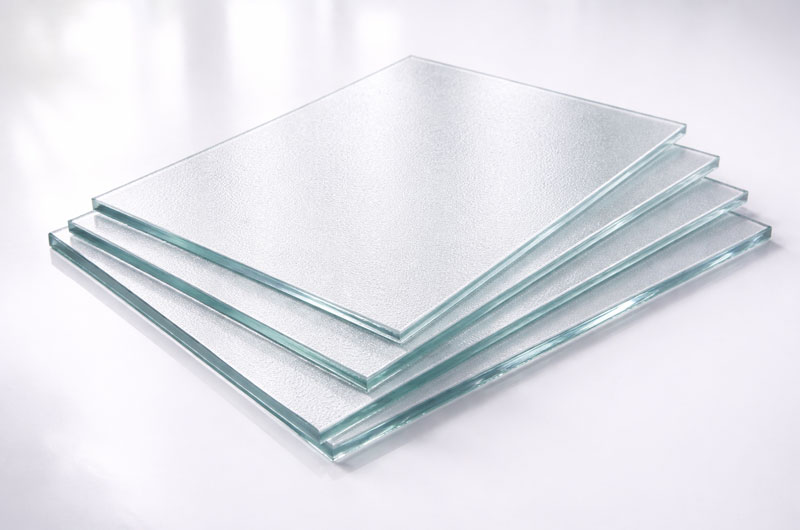
Rough Surface
- Embossed / frosted surfaces.
- Requires high-tack protective film.
- Otherwise, the film may easily detach.
- Suitable for frosted, embossed, and sandblasted glass.
FAQs
Common materials include PE (Polyethylene) and PET (Polyester) films.
It can be applied to float glass, tempered glass, laminated glass, coated glass, mirror glass, and textured glass.
Typically from a few weeks up to 6–12 months, depending on product specifications and environmental conditions.
Our film is designed for clean removal when matched correctly to the glass surface and application condition.
Yes, specially formulated adhesives are used for sensitive coated surfaces.
We usually recommend sharing the glass type, surface finish, dimensions, application duration, and processing or storage conditions.
Construction, automotive, electronics, furniture, and solar industries.