Choosing the right protective film manufacturer is not just about price—it’s about ensuring consistent quality, reliable supply, and technical support that protects your products throughout their lifecycle.
This guide outlines the key factors buyers should evaluate when selecting a protective film manufacturer and helps you make a professional, informed decision.
1. Manufacturing Capabilities
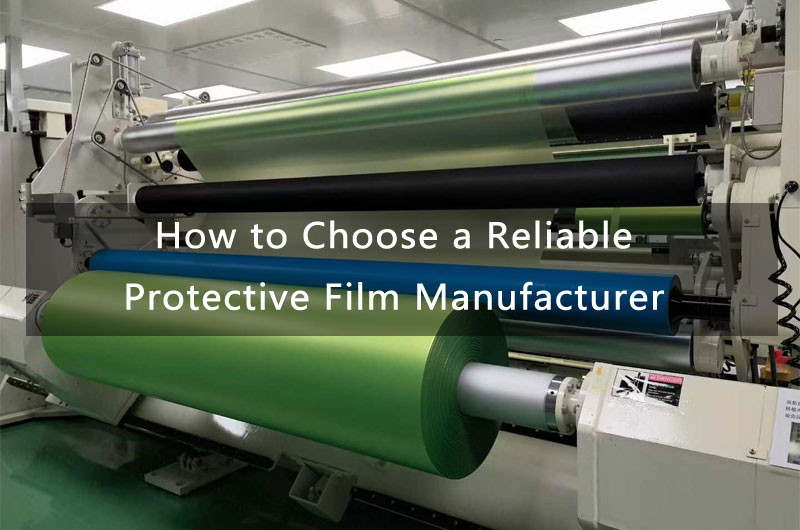
A reliable protective film manufacturer must have strong and scalable production capabilities. This directly affects product consistency, delivery efficiency, and the ability to support both standard and customized orders.
What to Evaluate:
- Coating Lines (Precision & Speed)
Advanced coating lines ensure uniform adhesive distribution, which is critical for stable adhesion and clean removal. High-speed lines also indicate strong production efficiency. - Printing Capability (Up to 8 Colors)
Manufacturers with multi-color printing capabilities can support branding, installation instructions, and warning labels directly on the film surface. - Slitting & Rewinding Capacity
Precision slitting ensures accurate roll widths and smooth edges, which are essential for automated application processes. - Production Capacity (Monthly/Annual Output)
A manufacturer with large-scale capacity can support long-term supply and bulk orders without delays.
Strong manufacturing capabilities ensure consistent product quality and the ability to meet both urgent and large-volume demands.
2. Adhesive Technology
The adhesive system is the core of any protective film. Poor adhesive performance can lead to residue, lifting, or surface damage.
What to Evaluate:
- Water-Based Acrylic PSA
Environmentally friendly, low VOC, and widely used for temporary protective films. - Adhesion Stability Over Time
The adhesive should maintain consistent peel strength without increasing excessively during storage or application. - Clean Removal Performance
No residue, no surface contamination, and no damage upon removal. - Customizable Adhesion Levels
The ability to adjust adhesion (low, medium, high, ultra-high) based on different surface types.
A reliable adhesive ensures optimal protection without creating downstream problems such as residue or difficult peeling.
3. Quality Control System
A robust quality control (QC) system is essential for ensuring every roll of film meets performance standards.
What to Evaluate:
- Raw Material Inspection
Ensures base films and adhesives meet required specifications before production. - In-Process Quality Control
Monitoring coating thickness, adhesion levels, and surface uniformity during production. - Final Product Testing
Includes peel strength tests (180°), unwind force, and aging tests to simulate real-world conditions. - Certifications
Look for recognized standards such as ISO, which indicate structured quality management systems.
A strong QC system minimizes defects, ensures consistency, and guarantees that the product performs as expected in your application.
4. Customization Capability
Different industries and surfaces require tailored protective film solutions. A reliable manufacturer should provide flexible and comprehensive customization options.
What to Evaluate:
- Film Thickness Customization
From thin films for smooth surfaces to thicker films for rough or textured materials. - Adhesion Tuning
Adjusting peel strength based on substrate requirements. - Color Options
Transparent, blue, white, black & white, or custom colors for different applications. - Printing Options
Branding, logos, and installation instructions directly on the film. - Roll Size & Core Size Customization
Compatibility with your application equipment and logistics requirements.
Customization ensures the protective film fits your exact application, improving efficiency and performance.
5. Industry Experience
Experience across multiple industries indicates a manufacturer’s ability to understand application-specific challenges and provide proven solutions.
Key Application Areas to Consider:
- Aluminum Profiles (anodized, coated, brushed surfaces)
- PVC Profiles (smooth, laminated, textured finishes)
- Stainless Steel (mirror, brushed, PVD-coated)
- Glass / Low-E Glass (surface and edge protection)
An experienced manufacturer can recommend the right film structure, adhesion level, and thickness based on real-world applications.
6. Delivery & Supply Stability
Even the highest-quality product loses value if delivery is delayed. Reliable supply is essential for long-term partnerships.
What to Evaluate:
- Lead Time Reliability
Consistent delivery schedules without unexpected delays. - Capacity for Large Orders
Ability to fulfill bulk orders during peak demand. - Flexibility for Small Batches
Support for customized or trial orders without excessive minimum order requirements.
Stable supply ensures uninterrupted production and reduces operational risks.
7. Technical Support & Service
A professional manufacturer should act as a technical partner—not just a supplier.
What to Evaluate:
- Sample Testing Support
Providing samples for validation before mass production. - Adhesion Recommendations
Expert guidance based on substrate type and application conditions. - Problem-Solving Capabilities
Assistance with common issues such as:- Air bubbles during application
- Adhesive residue after removal
- Film lifting or edge curling
Reliable technical support helps prevent expensive issues and guarantees optimal application results.
Conclusion
Selecting a reliable protective film manufacturer requires a comprehensive evaluation of technical capabilities, product quality, customization flexibility, and service support.
A trusted manufacturer should offer:
- Advanced production equipment and scalable capacity
- High-performance, customizable adhesive systems
- Strict quality control processes with certified standards
- Flexible customization tailored to your application
- Proven experience across multiple industries
- Reliable delivery and supply stability
- Responsive technical support and problem-solving expertise