
Among the various types of temporary protective films available on the market, PE protective film and PET protective film are two of the most commonly used materials.
Although both serve the same basic purpose—protecting surfaces from scratches, dust, and contamination—they differ significantly in terms of material properties, performance, cost, and applications.
This article provides a comprehensive comparison between PE and PET protective film, including their material characteristics, advantages, limitations, and common applications.
What Is PE Protective Film?
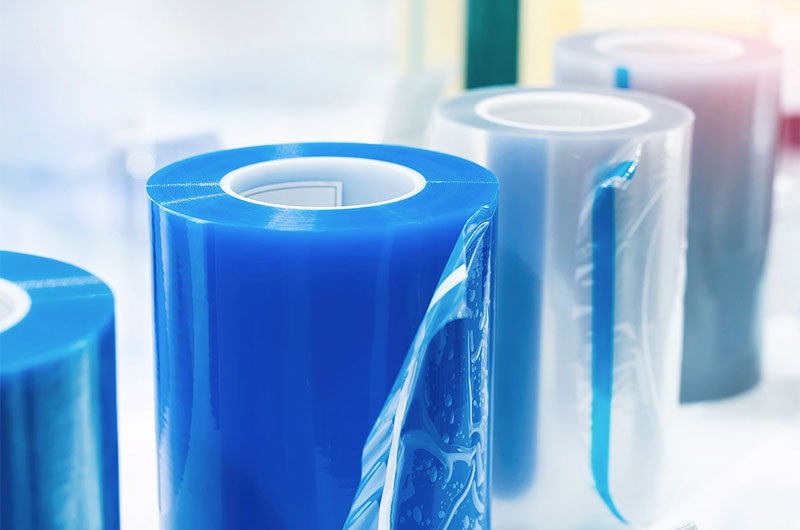
PE protective film is made from polyethylene, they are known for their flexibility, affordability, and excellent surface protection capabilities. These films are typically produced through extrusion processes and coated with pressure-sensitive adhesives that allow easy application and removal.
PE protective films are widely used in industries such as metal processing, construction, electronics, and plastic manufacturing. Their softness and flexibility enable easy conformity to various shapes and surface profiles.
Advantages and Disadvantages
|
|
Key Characteristics of PE Protective Film
- High flexibility and elasticity: PE film is soft and stretchable, which allows it to adapt easily to curved or irregular surfaces.
- Cost-effective material: Polyethylene is inexpensive to produce, making PE protective films an economical option for large-scale applications.
- Easy application and removal: Most PE films use low-tack adhesives that allow them to be removed without leaving adhesive residue.
- Good impact resistance: The relatively thick and flexible structure of PE film helps absorb impact and protect surfaces from scratches or dents.
- Moisture resistance: PE film provides reliable resistance against moisture and environmental contaminants.
Common Applications of PE Protective Film
Because of its versatility and affordability, PE protective film is widely used in many industries, including:
- Aluminum profiles and stainless steel sheets
- Plastic sheets and acrylic panels
- Glass and mirrors
- Automotive interior surfaces
- Furniture and decorative panels
- Construction materials
In these applications, PE film protects surfaces during processing operations such as cutting, bending, stamping, and transportation.
What Is PET Protective Film?
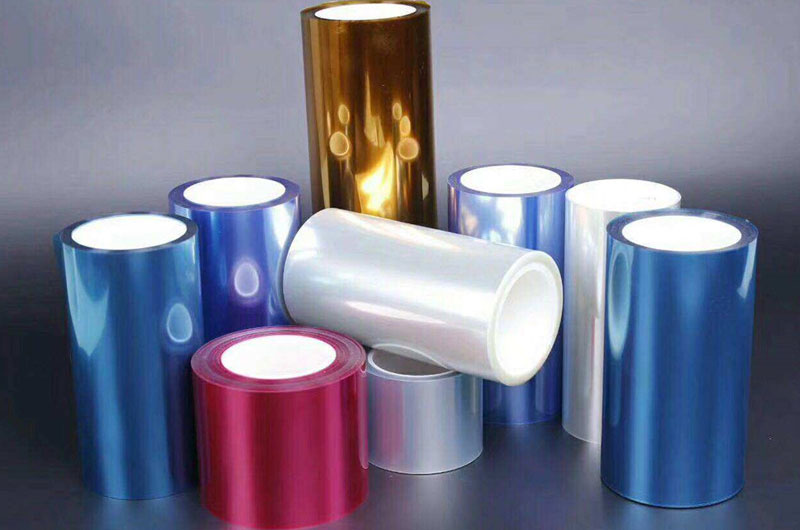
PET protective film is made from polyethylene terephthalate, a polyester thermoplastic known for strength, clarity, and stability. PET films are typically manufactured through biaxial orientation processes that improve their mechanical properties and optical clarity.
Compared with PE films, PET protective films are harder, thinner, and more durable. They are often used in applications requiring high precision, high transparency, or superior abrasion resistance.
Advantages and Disadvantages
|
|
Key Characteristics of PET Protective Film
- High mechanical strength: PET film provides high tensile strength and stable dimensions, preventing stretching and deformation.
- Excellent optical clarity: PET protective films typically offer very high transparency and light transmission, often above 90%.
- Superior scratch and abrasion resistance: The hard surface of PET film protects delicate surfaces from scratches and wear.
- Chemical and temperature resistance: PET films have good resistance to chemicals, solvents, and temperature fluctuations.
- Thin and lightweight structure: PET films are usually thinner than PE films while still maintaining strong protective performance.
Common Applications of PET Protective Film
Due to its optical and mechanical properties, PET protective film is commonly used in high-precision industries such as:
- Mobile phone screens
- LCD and OLED displays
- Touch panels
- Optical lenses
- Electronic components
- High-end glass surfaces
These applications require high transparency and scratch resistance, making PET an ideal choice.
PE vs PET Protective Film Comparison Chart
| Feature | PE Protective Film | PET Protective Film |
|---|---|---|
| Material | Polyethylene (PE) | Polyethylene Terephthalate (PET) |
| Film Structure | Soft and flexible plastic | Hard and rigid polyester |
| Flexibility | Very flexible, adapts to curved surfaces | Less flexible, best for flat surfaces |
| Transparency | Moderate transparency | Very high optical clarity |
| Scratch Resistance | Moderate | Excellent |
| Impact Resistance | Good cushioning and shock absorption | Lower cushioning but high hardness |
| Thickness Range | Usually thicker (20–100 μm) | Usually thinner (12–50 μm) |
| Adhesive Strength | Low to medium tack | Medium to high tack |
| Temperature Resistance | Moderate | High |
| Cost | Lower cost | Higher cost |
| Typical Applications | Aluminum profiles, metal sheets, plastics, glass | Electronics, screens, optical surfaces |
| Best For | Industrial surface protection | High-precision surface protection |
Differences Between PE and PET Protective Films
Although both materials are designed for surface protection, they have several fundamental differences.
1. Material Structure
The most basic difference lies in their chemical composition.
- PE protective film is made from polyethylene, a flexible and soft polymer.
- PET protective film is made from polyester, which has a rigid and stronger molecular structure.
This distinction greatly influences their mechanical properties and overall performance.
2. Flexibility vs. Rigidity
PE film is soft and highly flexible, enabling easy conformity to curved or irregular surfaces.
PET film, on the other hand, is harder and more rigid. Although it enhances scratch resistance, it reduces flexibility compared to PE film.
As a result:
- PE film is ideal for uneven or textured surfaces.
- PET film is better suited for flat and smooth surfaces.
3. Optical Clarity
PET protective film provides significantly better optical clarity than PE film.
Because PET has a smooth surface and excellent light transmission, it is widely used for display and screen protection.
PE films typically have lower transparency and are often used for industrial protection where visibility is less important.
4. Thickness and Durability
PE protective films are generally thicker and more flexible, which improves their impact resistance.
PET films are thinner but much harder and more scratch-resistant.
In simple terms:
- PE film → better cushioning and flexibility
- PET film → better hardness and abrasion resistance
5. Adhesive Strength
PE protective films typically use low-tack or medium-tack adhesives, making them easy to remove without residue.
PET protective films often use stronger adhesives to ensure secure attachment to delicate surfaces such as screens and electronics.
6. Cost
PE protective film is more cost-effective than PET film, thanks to lower material costs and simpler production processes.
PET films require more complex production processes, such as biaxial orientation, which increases the overall cost.
How to Choose the Right Protective Film
Selecting between PE and PET protective film depends on several factors, including surface type, protection requirements, and budget.
Choose PE Protective Film If:
- The surface is textured or irregular
- Cost efficiency is a priority
- Temporary protection is required
- The application involves metal sheets, plastic panels, or construction materials
Choose PET Protective Film If:
- The surface requires high transparency
- Scratch resistance is critical
- The application involves electronic displays or optical products
- Long-term protection is required