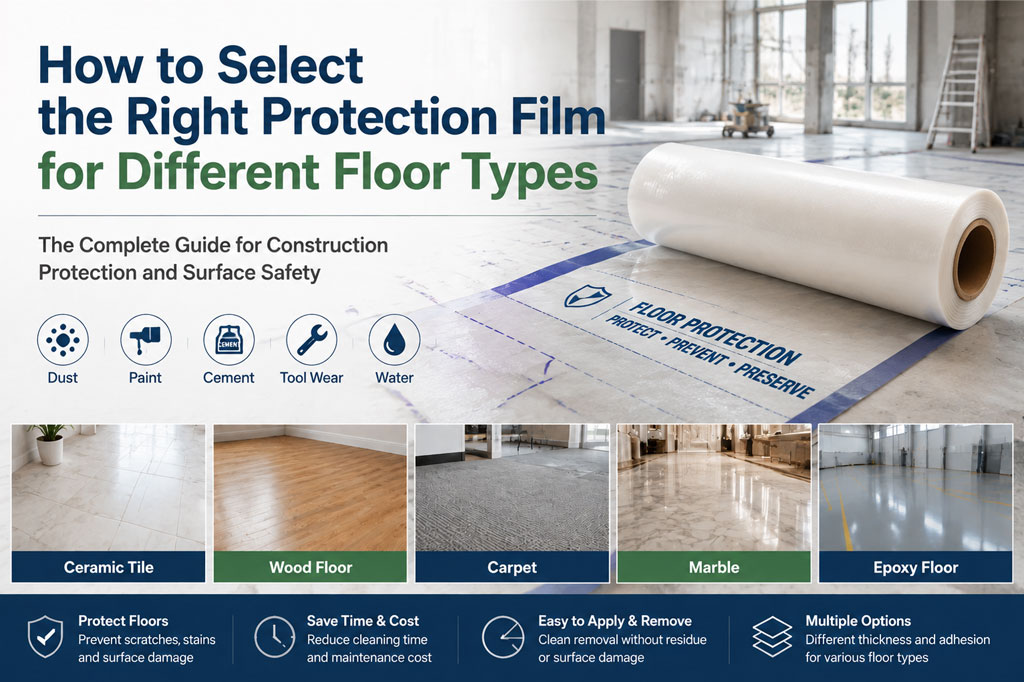
During construction, renovation, and interior finishing projects, floors are often exposed to multiple risks, including dust accumulation, paint splashes, cement stains, moisture, and mechanical damage caused by tools and equipment.
Different floor materials have different surface characteristics. Ceramic tiles, hardwood floors, carpets, marble, and epoxy floors require different levels of adhesion, thickness, durability, and moisture resistance.
This guide explains how to select the right floor protection film according to different floor types and construction conditions.
1. Protection Film for Ceramic Tile Floors
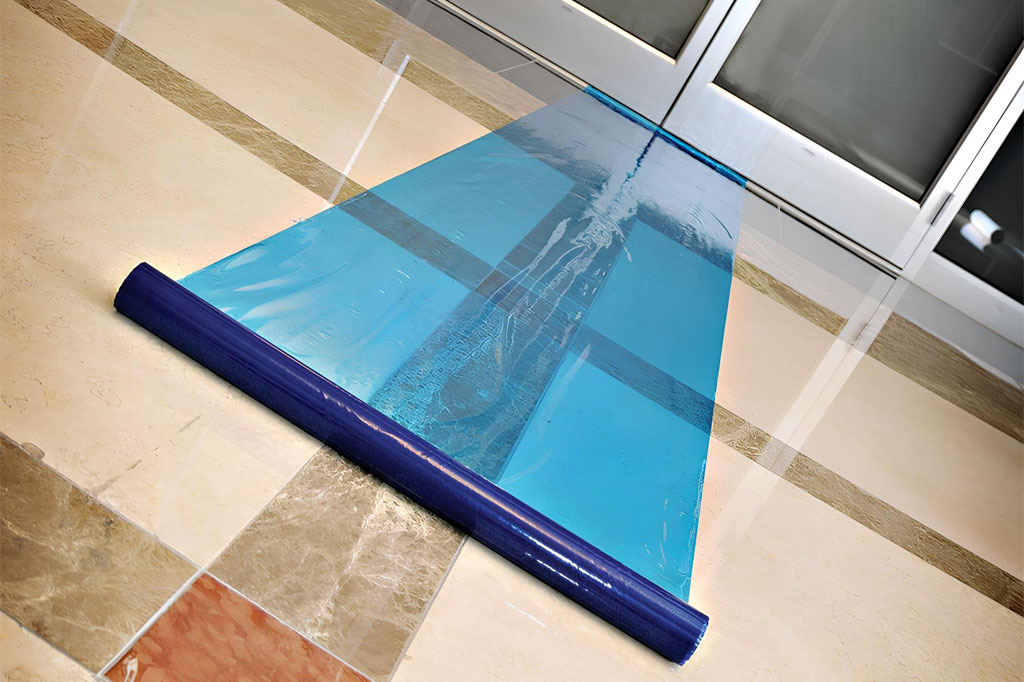
Ceramic tiles are widely used in residential, commercial, and industrial buildings because of their hardness and durability. However, polished tiles, especially glossy surfaces, are vulnerable to scratches caused by sand particles and construction debris.
Main Risks During Construction
- Dust and sand abrasion
- Paint contamination
- Cement residue
- Scratches from moving equipment
Recommended Protection Film Features
For ceramic tiles, choose:
Medium Adhesion Acrylic PSA
Ceramic tiles usually have smooth and non-porous surfaces. A film with excessive adhesion may leave adhesive residue after long-term application.
Recommended characteristics:
| Parameter | Recommended Range |
|---|---|
| Film thickness | 50–80 microns |
| Adhesion level | Medium |
| Adhesive type | Water-based acrylic PSA |
| Tensile strength | High |
| Surface | Smooth and abrasion-resistant |
Special Consideration for Polished Tiles
Glossy tiles require protection films with:
- Low contamination absorption
- Scratch-resistant PE film layer
- Clean removal after 30–90 days
2. Protection Film for Hardwood Floors
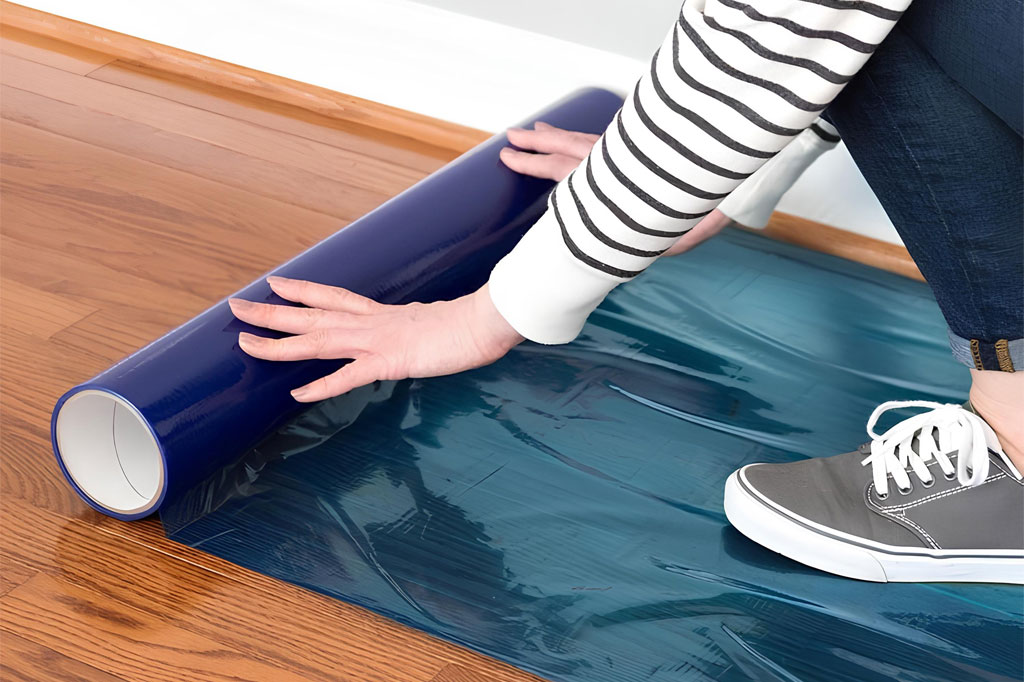
Wood flooring is more sensitive than ceramic tiles because natural wood and engineered wood can be affected by moisture, chemicals, and excessive adhesive force.
Main Risks During Construction
- Moisture penetration
- Paint and chemical contamination
- Surface coating damage
- Scratches from tools and furniture movement
Recommended Protection Film Features
Hardwood floors require:
Low Adhesion Protective Film
The adhesive should hold the film securely while allowing clean removal.
Recommended specifications:
| Parameter | Recommended Range |
|---|---|
| Film thickness | 40–60 microns |
| Adhesion | Low to medium |
| PSA type | Low-tack acrylic adhesive |
| Application period | 7–30 days |
Important Tip
Avoid using high-tack protection film on:
- Lacquered wood floors
- UV-coated wood floors
- Newly installed floors
Strong adhesive forces may damage surface coatings when the film is removed.
3. Protection Film for Carpet Floors
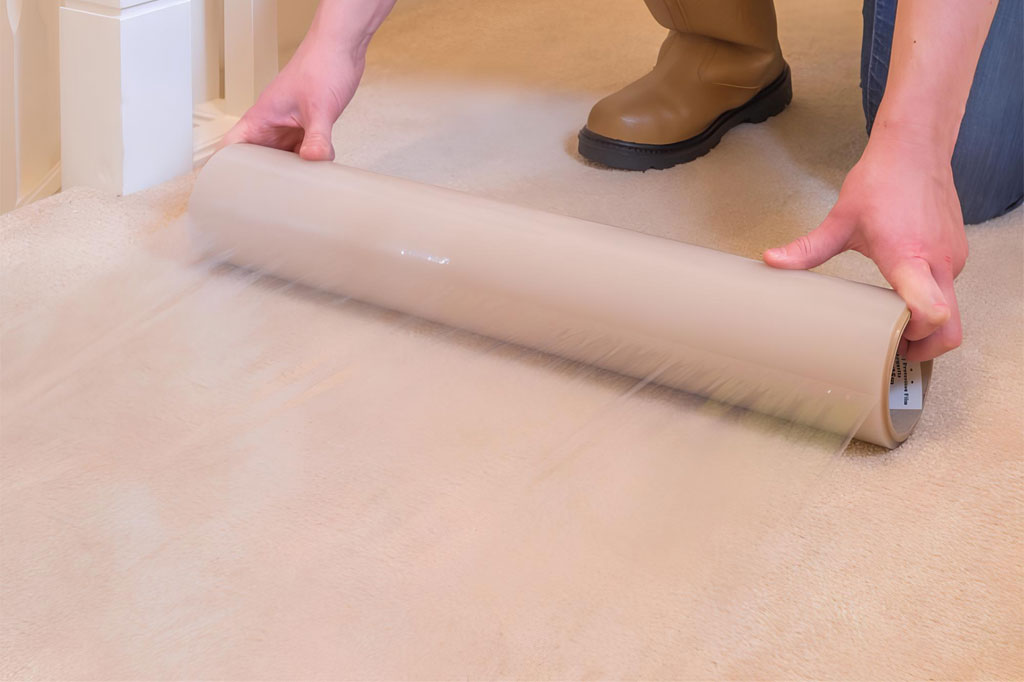
Carpet requires protection against dust, paint, and heavy pedestrian traffic. Unlike hard floors, carpet surfaces are soft and absorb contaminants easily.
Main Risks During Construction
- Dust penetration
- Paint spills
- Footprints
- Mud and moisture
Recommended Protection Film Features
Carpet protection film is usually different from standard surface protection films.
Key requirements:
Strong Grip Without Damaging Fibers
The film should:
- Stay firmly attached to carpet fibers
- Prevent movement
- Remove without pulling fibers
Recommended specifications:
| Parameter | Recommended Range |
|---|---|
| Film thickness | 60–100 microns |
| Adhesion | Medium |
| Surface | Anti-slip texture |
| Protection period | 30–90 days |
Construction Recommendation
For high-traffic areas such as:
- Corridors
- Hotel entrances
- Office buildings
choose thicker films with better puncture resistance.
4. Protection Film for Marble Floors
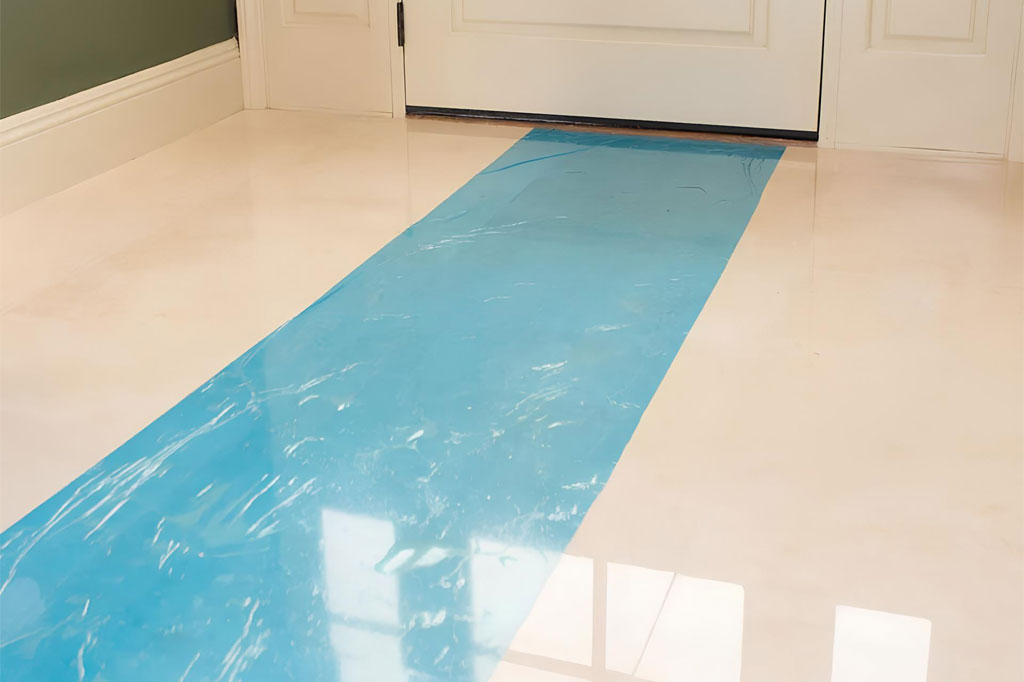
Marble is a premium decorative material with a polished surface. Although marble is hard, its surface finish can be easily scratched or stained.
Main Risks During Construction
- Acidic contamination
- Cement residue
- Scratches
- Surface dulling
Recommended Protection Film Features
Marble requires:
Ultra-Clean Removable Adhesive
Recommended properties:
| Parameter | Recommended Range |
|---|---|
| Film thickness | 50–80 microns |
| Adhesion | Low-medium |
| PSA | Residue-free acrylic adhesive |
| UV resistance | Recommended for long projects |
Why Adhesive Selection Matters
Natural stone surfaces may react with unsuitable adhesives. Low-quality films may cause:
- Adhesive transfer
- Surface discoloration
- Difficult cleaning
For luxury projects, adhesive cleanliness is often more important than maximum bonding strength.
5. Protection Film for Epoxy Floors
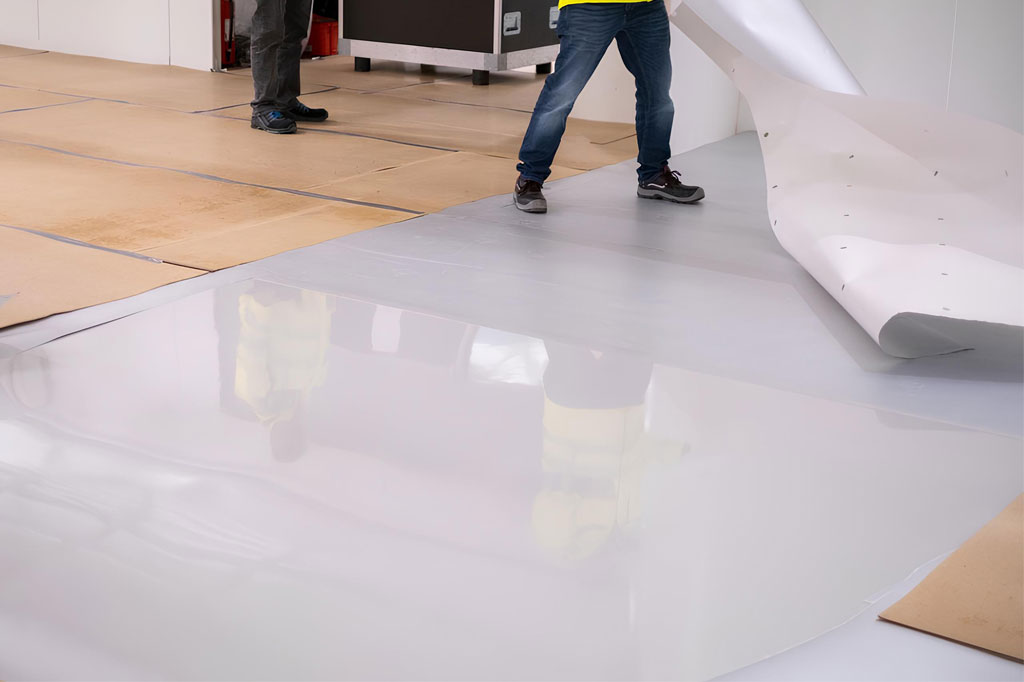
Epoxy flooring is commonly used in:
- Factories
- Warehouses
- Parking facilities
- Laboratories
Although epoxy surfaces are durable, newly cured epoxy floors require careful protection.
Main Risks During Construction
- Surface scratches
- Chemical contamination
- Heavy equipment damage
- Dust embedding
Recommended Protection Film Features
Epoxy floors require stronger mechanical protection.
Recommended specifications:
| Parameter | Recommended Range |
|---|---|
| Film thickness | 80–120 microns |
| Adhesion | Medium |
| Tensile strength | High |
| Puncture resistance | High |
For industrial applications, thicker PE protection film provides better protection against:
- Forklift movement
- Metal debris
- Heavy tools
Conclusion
Selecting the right protection film is not simply about choosing the thickest product. The ideal solution depends on the interaction between:
Floor material + construction environment + protection period + adhesive performance.
| Floor Type | Recommended Thickness | Adhesion Level | Main Protection Focus |
|---|---|---|---|
| Ceramic Tile | 50–80 μm | Medium | Scratch & dust protection |
| Hardwood Floor | 40–60 μm | Low-medium | Residue-free protection |
| Carpet | 60–100 μm | Medium | Anti-slip & contamination control |
| Marble | 50–80 μm | Low-medium | Surface cleanliness |
| Epoxy Floor | 80–120 μm | Medium | Heavy-duty protection |
For ceramic tiles and marble, clean removal and scratch protection are the priority. Hardwood floors require gentle adhesion to avoid coating damage. Carpets need strong grip and contamination prevention, while epoxy floors require heavy-duty protection against mechanical damage.