Laser cutting is one of the most efficient and precise methods for processing metal sheets—but it also introduces risks to surface quality. For industries working with stainless steel, aluminum, and coated metals, even minor scratches, burn marks, or adhesive residue can lead to costly rework or rejected products.
This is where protective film for laser cutting plays a critical role.
This article focuses on solving real production challenges and helping you select the right protective film for optimal results.
1. Why Use Protective Film in Laser Cutting?
Laser cutting is not just about cutting accuracy—it’s also about preserving the surface integrity of the material. Without proper protection, metal sheets are vulnerable throughout the entire process: handling, cutting, and post-processing.
Key Problems Without Protective Film
- Scratches during loading/unloading and machine movement
- Burn marks caused by heat exposure
- Surface contamination from smoke and debris
- Increased rejection rates due to poor appearance
Key Benefits of Using Protective Film
1. Prevent Surface Scratches & Burn Marks
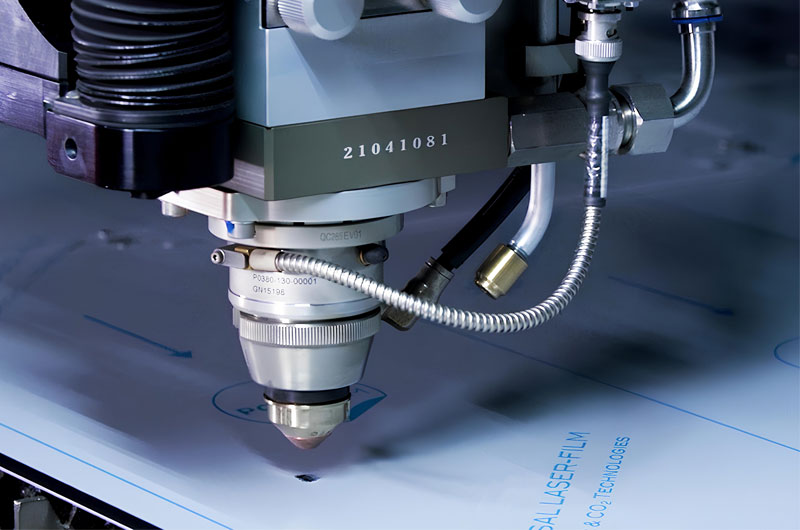
Protective film acts as a physical barrier between the metal surface and external contact, preventing scratches from rollers, tools, and operators. It also reduces visible burn marks caused by heat exposure during cutting.
2. Reduce Rework and Scrap Rates
Surface defects often require polishing, re-coating, or even scrapping the material. Protective film minimizes these risks, improving yield and reducing production costs.
3. Maintain Surface Finish Quality
For premium finishes like mirror stainless steel, brushed surfaces, or coated panels, even minor imperfections are unacceptable. Protective film preserves the original finish until final installation.
4. Protection Beyond Cutting
The film continues to protect the surface during bending, stamping, transport, and installation—ensuring end-to-end surface integrity.
2. How Laser Cutting Affects Surface Protection
Laser cutting introduces extreme processing conditions that directly impact both the metal surface and the protective film.
Key Technical Challenges
High Temperature Exposure
Laser cutting generates intense localized heat. If the protective film cannot withstand this temperature, it may:
- Melt or shrink
- Deform and expose the surface
- Leave adhesive residue
Molten Metal & Sparks
During cutting, molten metal and sparks are ejected from the cutting zone. These can:
- Adhere to unprotected areas
- Damage surface coatings
- Create micro-defects
Smoke and Residue Contamination
Laser cutting produces smoke, fumes, and fine particles that can settle on the surface. Without protection, this leads to:
- Surface discoloration
- Cleaning difficulties
- Reduced product quality
Risk of Adhesive Degradation
Low-quality adhesives may break down under heat, resulting in:
- Residue left on the surface
- Difficult removal
- Additional cleaning processes
3. Key Features of Laser Cutting Protective Film
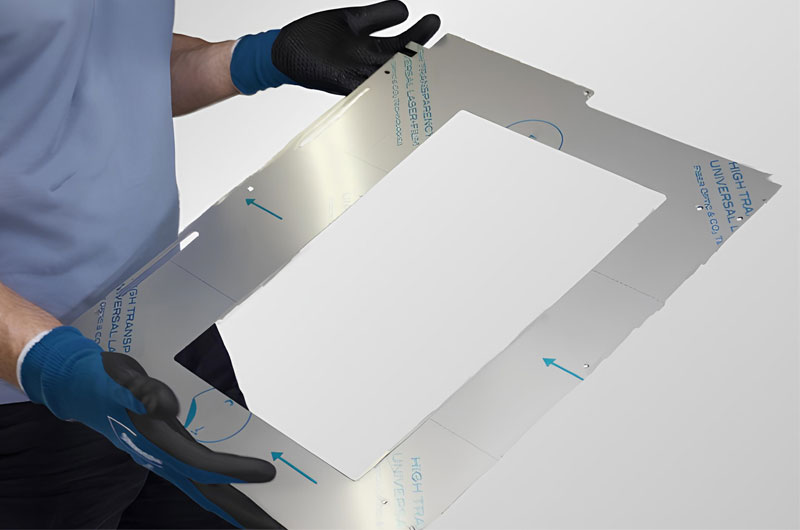
Choosing the right protective film is essential. Not all films are suitable for laser processing—especially when dealing with high temperatures and sensitive surfaces.
3.1 Heat Resistance
One of the most critical requirements is the film’s ability to withstand laser cutting temperatures.
What to Look For:
- High-temperature resistant base film (typically PE or PET)
- Stable performance under short-term thermal exposure
- No melting, shrinking, or deformation
A high-quality film ensures that:
- The surface remains fully covered during cutting
- No adhesive transfer occurs
- The cutting process remains clean and efficient
3.2 Stable Adhesion
The adhesive must strike a precise balance—strong enough to stay in place, but easy to remove afterward.
Requirements:
- Consistent adhesion during cutting and handling
- Resistance to vibration and airflow from cutting equipment
- No lifting or edge peeling
Typical adhesion levels (180° peel test):
- Low tack (0.2–2 N): Smooth surfaces
- Medium tack (2–4 N): Lightly textured surfaces
- High tack (4–10 N): Rough or coated surfaces
Proper adhesion ensures:
- Film stays intact during cutting
- No movement that could affect cutting accuracy
3.3 Clean Removal (No Residue)
This is one of the biggest concerns for metal fabricators.
Why It Matters:
- Residue requires additional cleaning
- Can damage coatings or finishes
- Increases labor and processing time
High-Performance Solution:
Water-based acrylic pressure-sensitive adhesives (PSA) are widely preferred because they:
- Resist degradation under heat
- Maintain stable bonding properties
- Allow clean, residue-free removal
Clean removal is especially critical for:
- Stainless steel (mirror, BA finish)
- Coated metals (painted, PVD, fluorocarbon)
- Decorative panels
3.4 Surface Compatibility
Different materials and finishes require tailored protective solutions.
1. Mirror Stainless Steel
- Requires ultra-clean removal
- Low to medium adhesion recommended
- High clarity films preferred for inspection
2. Brushed / BA Finish Stainless Steel
- Slightly higher adhesion to ensure stability
- Must prevent directional scratches
3. Aluminum Sheets
- Often softer and more prone to scratches
- Requires balanced adhesion to avoid residue
- Heat resistance still essential
4. Coated Metals
- Includes painted, anodized, and laminated surfaces
- Requires:
- Strong adhesion to textured coatings
- Zero chemical interaction with coatings
- UV resistance for outdoor exposure
Conclusion
Protective film is not just an accessory—it is a critical component of the laser cutting process.
Selecting the right protective film means understanding your materials, processes, and end-use requirements.
A well-matched protective film solution will:
- Improve product consistency
- Reduce post-processing work
- Enhance customer satisfaction
- Lower overall production costs