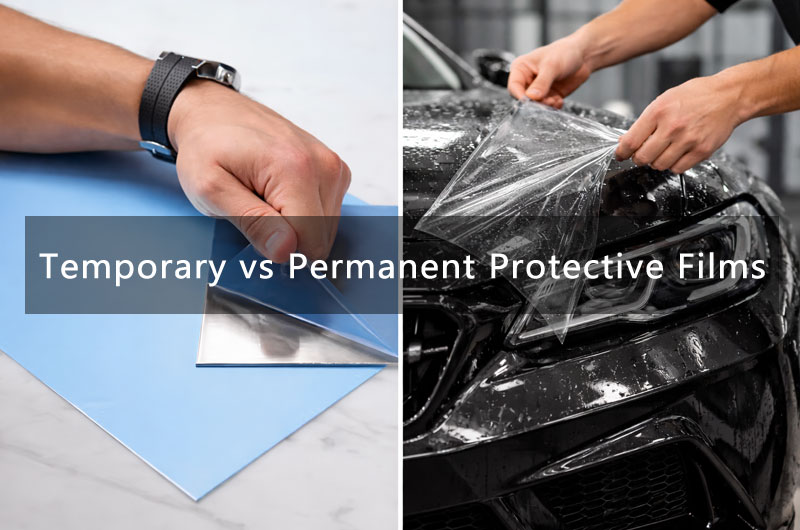
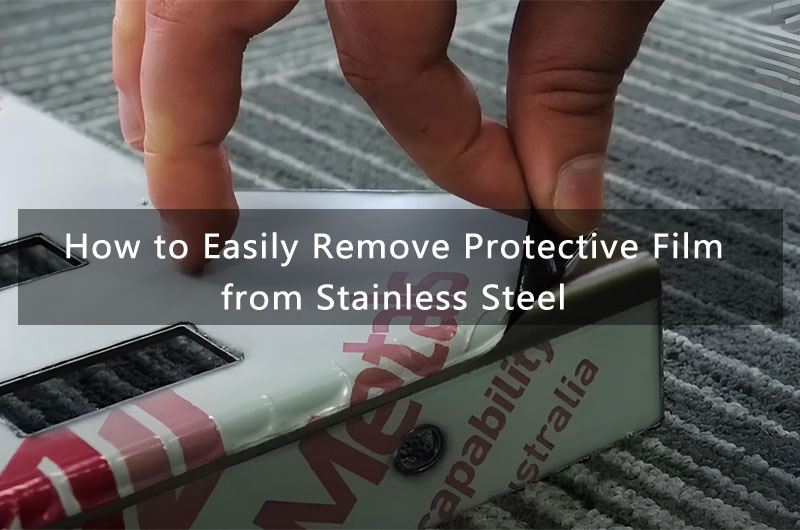
Protective film is widely applied to stainless steel surfaces to prevent scratches, contamination, and damage during manufacturing, transport, and installation.
However, once the job is complete, removing the film—especially if it has been exposed to heat, sunlight, or time—can become surprisingly difficult.
Why Protective Film Becomes Difficult to Remove
Before diving into removal methods, it’s important to understand why stainless steel protective film can become stubborn:
- Aging adhesive: Over time, adhesives harden and bond more strongly.
- Heat exposure: Sunlight or high temperatures can “bake” the film onto the surface.
- UV degradation: Some films degrade and become brittle.
- Delayed removal: Leaving film on too long increases removal difficulty
Because of these factors, what should be a simple peel can turn into a time-consuming task if not handled properly.
5 Ways to Easily Remove Protective Film from Stainless Steel
Below, we will walk you through simple, safe, and effective methods to remove protective film from stainless steel without damaging the surface.
Method 1: Simple Hand Peeling
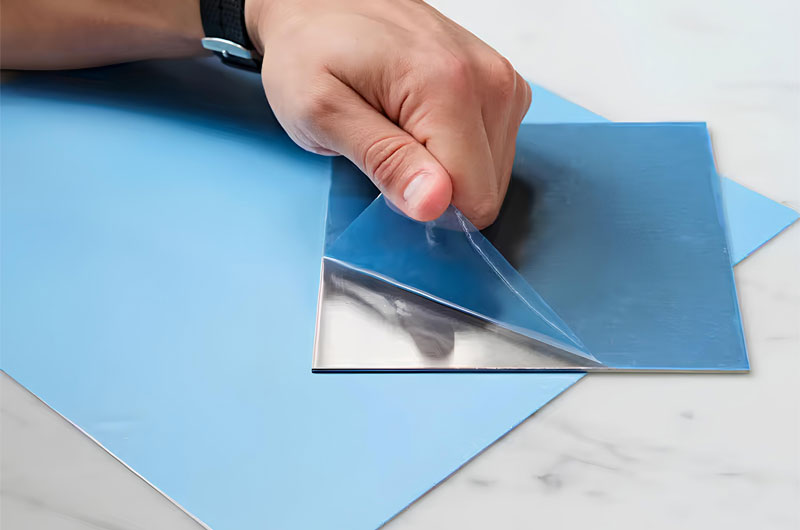
The easiest and most recommended approach is manual peeling.
Steps:
- Locate an edge or corner: Gently lift one corner using your fingernail or a plastic scraper.
- Peel slowly at an angle: Peel the film back at a low, sharp angle instead of pulling straight upward to prevent tearing.
- Continue steadily: Maintain even pressure and avoid rushing.
This method works best when the film is fresh and hasn’t bonded strongly to the surface.
Method 2: Use a Plastic Scraper
For large sheets or partially stuck film, a plastic scraper is helpful.
Steps:
- Lift a corner using the scraper
- Gently slide the scraper under the film
- Peel while guiding the scraper forward
This method reduces strain and speeds up removal, especially on flat panels.
⚠️ Never use metal tools—they can scratch stainless steel.
Method 3: Use Mild Solvents
If adhesive bonding is strong, solvents can help dissolve it.
Suitable options:
- Rubbing alcohol
- Adhesive removers
- Mild citrus-based cleaners
Steps:
- Apply solvent to the edge of the film
- Rest it for a few minutes
- Peel the film slowly
Solvents help break down adhesive, making removal easier.
⚠️ Before full application, try it on a limited area to verify surface compatibility and avoid potential damage.
Method 4: Apply Heat for Stubborn Film
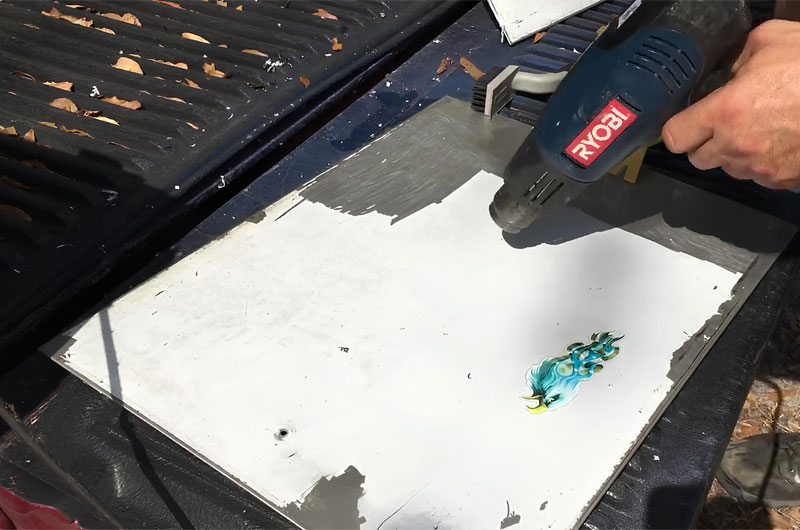
If the film resists peeling, heat is one of the most effective solutions.
Why heat works:
Heat softens both the plastic film and adhesive, reducing bonding strength.
Steps:
- Use a hair dryer or heat gun (low to medium setting)
- Warm the surface evenly for 1–3 minutes
- Peel the film while it’s still warm
Reapplying heat during peeling can help maintain flexibility and prevent tearing.
⚠️ Tip: Avoid excessive heat, especially on coated or painted stainless steel, to prevent surface damage.
Method 5: Remove Adhesive Residue
Even after removing the film, sticky residue may remain.
Effective cleaning methods:
- Rubbing alcohol wipe
- Mild soap + warm water
- Diluted vinegar solution (light use only)
Cleaning should always be done with a soft cloth and in the direction of the grain to avoid streaks or scratches.
What NOT to Do
Avoid these common mistakes when removing protective film:
- ❌ Using steel wool or abrasive pads (causes scratches)
- ❌ Applying excessive force (damages finish)
- ❌ Using harsh chemicals like bleach or chlorine (can corrode stainless steel)
- ❌ Using metal scrapers
Stainless steel may seem tough, but its surface finish is sensitive and easily damaged.
Best Practices for Easy Removal
To avoid future problems:
- Remove film as soon as possible after installation
- Choose the correct adhesive level for your application
- Avoid prolonged UV exposure if film is not UV-resistant
- Store materials in controlled environments
Timely removal is one of the most effective ways to prevent difficult peeling.
Final Thoughts
Removing protective film from stainless steel doesn’t have to be frustrating. In most cases, a simple peel is enough—but when challenges arise, combining heat, gentle tools, and mild solvents will solve the problem efficiently.
The key principles to remember are:
- Be gentle to protect the surface
- Use heat to soften adhesive
- Avoid harsh tools and chemicals
- Clean residue properly after removal