During construction and renovation projects, finished floors are highly vulnerable to scratches, stains, impact damage, and contamination caused by heavy equipment, dust, paint, and worker traffic. Without effective protection, contractors may need to replace damaged flooring materials or perform costly repairs, generating unnecessary waste and consuming additional resources.
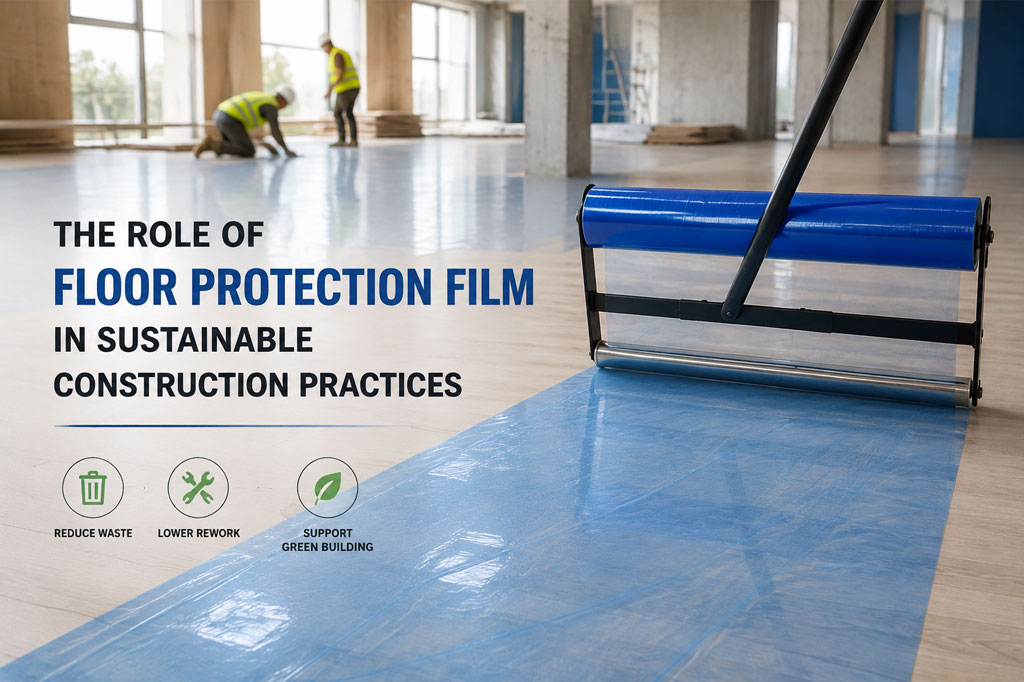
Floor protection film plays a small but important role in sustainable construction by helping contractors reduce material waste, avoid rework, and improve overall project efficiency.
1. Reducing Construction Waste Through Damage Prevention
Flooring materials such as hardwood, luxury vinyl tile (LVT), marble, ceramic tiles, and epoxy floors often represent a significant portion of a building’s interior investment.
During construction, these surfaces are exposed before the project is completed. Common causes of damage include:
- Construction debris and sharp particles
- Paint and chemical spills
- Movement of tools and equipment
- Foot traffic from multiple trades
- Heavy material transportation
Even minor scratches or stains can compromise the final appearance of premium flooring, forcing contractors to replace sections of the floor.
This creates additional waste:
| Without Floor Protection Film | With Floor Protection Film |
|---|---|
| Damaged flooring requires replacement | Existing flooring remains intact |
| More discarded materials | Reduced construction waste |
| Additional transportation and disposal | Lower environmental impact |
| Extra labor for repairs | Improved construction efficiency |
By preventing damage before it occurs, floor protection film extends the usable life of installed materials and reduces the amount of construction waste sent to landfills.
2. Lowering Carbon Footprint by Reducing Rework
Rework is one of the hidden environmental costs in construction.
When a finished floor is damaged, contractors must often:
- Remove the damaged material
- Transport replacement materials
- Install new flooring
- Dispose of old materials
- Allocate additional labor hours
Each additional step consumes:
- Energy
- Raw materials
- Transportation resources
- Labor time
According to construction industry studies, avoiding rework is one of the most effective ways to improve project sustainability because it reduces unnecessary resource consumption.
Floor protection film acts as a preventive solution rather than a corrective solution.
Instead of repairing damage after it happens, contractors create a temporary protective barrier during high-risk construction stages.
3. Supporting Green Construction Practices
Modern green construction focuses not only on building performance but also on responsible construction processes.
Floor protection film supports sustainable construction goals by enabling:
Cleaner Job Sites
A protected floor is easier to maintain during construction.
The film prevents:
- Dust accumulation
- Adhesive contamination
- Paint overspray
- Cement residue
A cleaner site reduces the need for excessive cleaning chemicals and water consumption.
Better Material Efficiency
Construction materials require significant energy and resources throughout their lifecycle:
- Raw material extraction
- Manufacturing
- Packaging
- Transportation
- Installation
Protecting installed materials means maximizing the value of resources that have already been consumed.
A simple layer of protective film can help preserve expensive flooring systems until project completion.
Improved Construction Workflow
When floors are protected, different construction teams can work more efficiently.
For example:
- Electrical contractors can move equipment safely
- Interior installers can transport materials without worrying about scratches
- Painting teams can reduce cleanup time
- Final inspection can proceed without repair delays
A smoother workflow reduces unnecessary labor and energy consumption.
4. Choosing Sustainable Floor Protection Film Materials
Not all floor protection films provide the same environmental benefits. Material selection is becoming increasingly important for green construction projects.
PE-Based Floor Protection Film
Polyethylene (PE) floor protection film is widely used because of its:
- Lightweight structure
- Good impact resistance
- Flexible application
- Easy removal
For many temporary protection applications, PE film provides an efficient balance between performance and resource usage.
Recyclable Protection Solutions
Sustainable construction increasingly favors materials that can be:
- Recycled after use
- Produced with lower material consumption
- Designed for single-material recycling streams
Manufacturers are developing thinner but stronger protection films that maintain performance while reducing plastic consumption.
Low-VOC Adhesive Technology
The adhesive layer is another important sustainability factor.
Advanced floor protection films use:
- Water-based acrylic adhesives
- Low-VOC formulations
- Residue-free removal technology
These solutions help improve indoor air quality and reduce chemical emissions during construction.
5. Floor Protection Film and Green Building Certifications
Green building standards increasingly evaluate the environmental impact of construction activities.
While floor protection film itself is only one component of a project, its application can contribute indirectly to sustainability goals by supporting:
- Waste reduction strategies
- Construction pollution control
- Resource efficiency
- Improved indoor environmental quality
For projects pursuing certifications such as LEED or other regional green building standards, reducing unnecessary material replacement and maintaining cleaner construction environments can support overall sustainability performance.
6. Application Areas Where Floor Protection Film Creates Value
Commercial Buildings
Office buildings, shopping centers, and hotels often install expensive flooring before final completion.
Protection film helps maintain:
- Lobby flooring
- Corridor surfaces
- Retail areas
- Decorative stone floors
until the building is ready for occupancy.
Residential Construction
In residential projects, protecting finished floors is essential because multiple trades may enter the home before handover.
Applications include:
- Hardwood floors
- Laminate flooring
- Ceramic tiles
- Engineered wood
Renovation Projects
Renovation generates significant waste because existing surfaces are often exposed to construction activities.
Floor protection film allows contractors to:
- Protect existing floors
- Reduce demolition waste
- Complete upgrades more sustainably