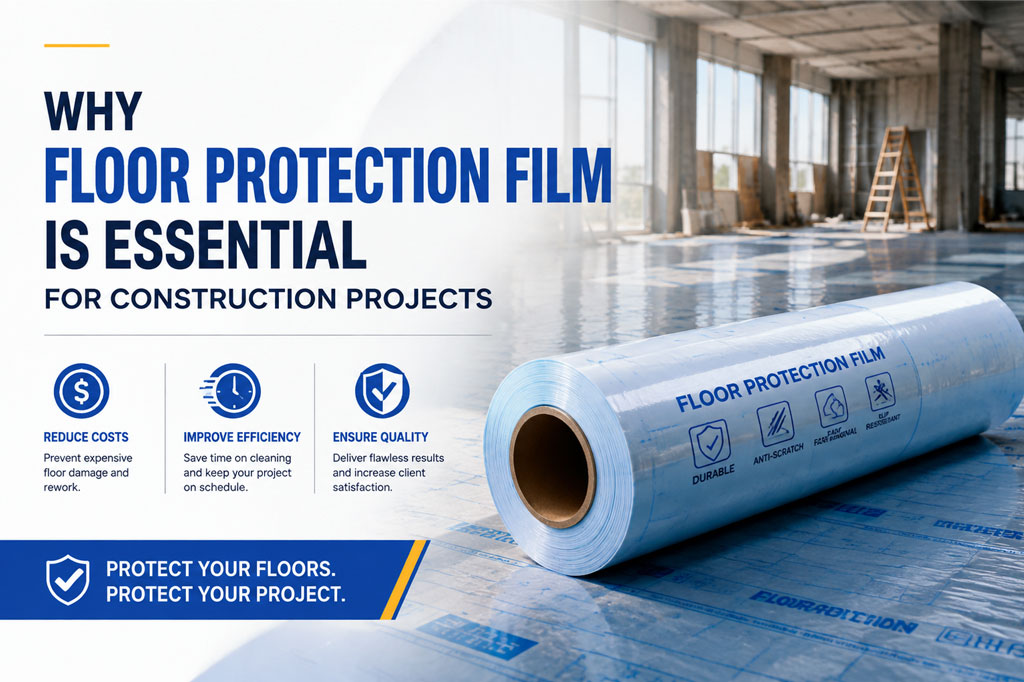
In construction and renovation projects, flooring is often one of the most visible and expensive finished surfaces.
In reality, floor protection film is a strategic investment that helps reduce rework, improve construction efficiency, and ensure flawless project delivery.
During construction, floors are exposed to:
- Heavy foot traffic
- Construction dust and debris
- Paint, adhesives, and chemical spills
- Scratches from tools and equipment
- Impact from materials handling
- Moisture and contamination
A properly selected floor protection film creates a temporary barrier that preserves the original condition of the flooring until the project is completed.
1. Floor Damage Creates Hidden Construction Costs
Many construction companies focus on visible material costs but underestimate the financial impact of floor damage.
A damaged floor can generate multiple unexpected expenses:
| Cost Category | Impact of Unprotected Floors |
|---|---|
| Repair materials | Replacement tiles, boards, coatings, or surface restoration |
| Labor costs | Additional workers required for repairs |
| Project delays | Extra time for refinishing or replacement |
| Cleaning costs | Intensive post-construction cleaning |
| Client complaints | Reduced satisfaction and potential disputes |
For example, replacing a damaged hardwood floor section after installation may require:
- Removing damaged areas
- Purchasing replacement materials
- Waiting for material availability
- Reinstalling the flooring
- Recleaning and inspecting the area
The direct repair cost is only part of the problem. The larger impact is often schedule disruption.
A low-cost protective film installed at the beginning of construction can prevent thousands of dollars in avoidable expenses.
2. Floor Protection Film Improves Construction Efficiency
Construction environments naturally generate dust, dirt, and debris.
Without floor protection, workers must spend significant time cleaning surfaces repeatedly throughout the project.
Floor protection film helps:
- Prevent dust accumulation
- Reduce contamination from construction activities
- Simplify daily housekeeping
- Shorten final cleaning time
Instead of repeatedly restoring the floor surface, workers can simply remove the protective film before project handover.
This creates a more efficient workflow:
Without Protection
Construction → Floor contamination → Cleaning → Repair → Re-cleaning → Delivery
With Protection Film
Construction → Protected Surface → Film Removal → Final Inspection → Delivery
3. Protecting Floors Allows Other Trades to Work Faster
Modern construction projects involve multiple teams:
- Flooring installers
- Electricians
- Painters
- HVAC contractors
- Furniture installers
- Interior designers
Many projects install finished flooring before other work is completed. This creates a conflict:
Workers need access to the space, but the finished floor needs protection.
Floor protection film solves this problem by allowing different trades to continue working without damaging completed surfaces.
Benefits include:
- More flexible scheduling: Contractors do not need to delay later-stage activities until all flooring work is complete.
- Less coordination pressure: Different teams can operate simultaneously without increasing damage risks.
- Faster project completion: Reduced protection concerns help maintain construction momentum.
4. Maintaining Final Delivery Quality and Client Satisfaction
In high-end residential, commercial, and hospitality projects, the final appearance determines customer perception.
A small scratch on:
- Premium wooden flooring
- Marble surfaces
- Decorative tiles
- High-gloss finishes
can significantly affect the perceived quality of the entire project.
Clients often evaluate construction quality through visible details:
- Clean surfaces
- Perfect finishes
- No scratches or stains
- Professional presentation
Floor protection film helps contractors deliver a project that looks exactly as intended during final inspection.
It supports:
Better workmanship → Better presentation → Higher client satisfaction
5. Floor Protection Film Supports Sustainable Construction Practices
Reducing waste is becoming increasingly important in modern construction.
Floor protection film contributes by reducing:
- Damaged flooring replacement
- Excess material consumption
- Cleaning chemical usage
- Construction waste
Instead of replacing expensive finished materials, contractors can preserve existing installations until completion.
This aligns with the industry’s movement toward:
- Lean construction
- Efficient resource management
- Sustainable building practices
6. Floor Protection Film Is a Small Investment with High Returns
Compared with the total cost of a construction project, floor protection film represents a very small percentage of the budget.
However, its value is much higher when considering avoided costs.
A simple calculation:
| Item | Without Protection | With Protection |
|---|---|---|
| Floor damage risk | High | Low |
| Repair possibility | Possible | Minimized |
| Cleaning workload | High | Reduced |
| Final inspection risk | Higher | Lower |
| Project confidence | Lower | Higher |
The purpose of floor protection is not simply protecting a surface.
It is protecting:
- Construction schedules
- Project budgets
- Contractor reputation
- Customer satisfaction