Protective films play a critical role in safeguarding surfaces—from aluminum profiles and stainless steel to glass, electronics, and automotive paint.
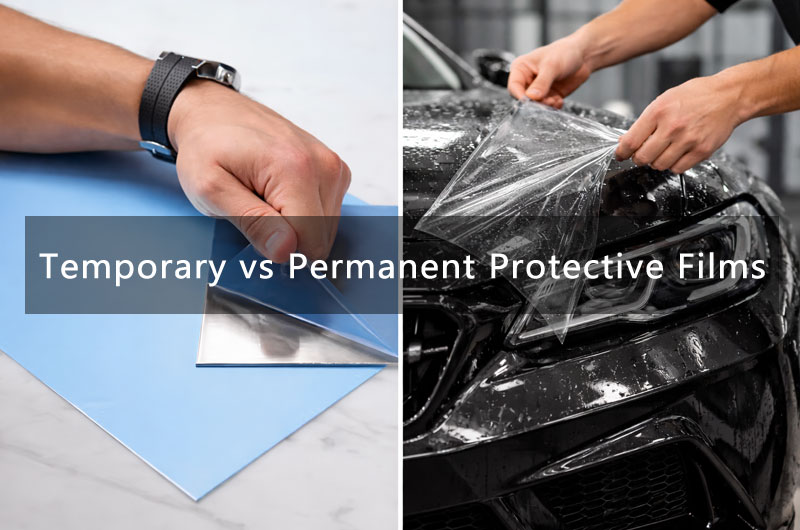
However, not all protective films are designed for the same purpose. The key distinction lies in whether the film is temporary or permanent.
Understanding the differences between these two categories helps manufacturers, contractors, and end users choose the right solution for their application.
1. What Is a Temporary Protective Film?
Temporary protective films are designed for short-term use, typically during manufacturing, transportation, storage, or installation processes.
Key Characteristics
- Low to medium adhesion
- Clean removal without residue
- Short service life (days to months)
- Flexible and easy to apply/remove
- Cost-effective for large-scale use
Temporary films are engineered to provide protection only when needed. Once the process is complete—such as construction or product installation—the film is removed and discarded.
For example, temporary window protection films are widely used in construction projects because they offer protection during critical stages and can be removed afterward without complications.
Typical Applications
- Aluminum profiles during fabrication and transport
- Stainless steel sheets during processing
- Glass protection during construction
- Screen and display protection during assembly
- Floor protection during renovation
Temporary films are especially valuable in industries where surfaces are exposed to short-term risks but must remain pristine for final delivery.
2. What Is a Permanent Protective Film?
Permanent protective films are designed to remain on the surface for long-term or lifetime protection. In many cases, they become part of the final product.
Key Characteristics
- High adhesion strength
- Long service life (years or lifetime)
- Strong resistance to UV, weather, and chemicals
- Durable against mechanical stress (scratches, abrasion, impacts)
- Stable appearance (no yellowing or degradation)
Permanent films are commonly used in applications where continuous protection is required. For example, high-quality permanent films can last over a decade while maintaining performance under UV exposure and environmental conditions.
Typical Applications
- Automotive paint protection film (PPF)
- Architectural glass films (UV, privacy, safety)
- Electronic display coatings
- Industrial equipment protection
- Anti-graffiti or anti-scratch films
Permanent films are not meant to be removed easily. Instead, they act as a long-lasting protective layer integrated into the product’s lifecycle.
3. Simple Comparison Chart: Temporary vs Permanent Protective Films
| Aspect | Temporary Protective Film | Permanent Protective Film |
|---|---|---|
| Purpose | Short-term surface protection during processing and transport | Long-term protection as part of the final product |
| Service Life | Days to months | Years to lifetime |
| Adhesion Level | Low to medium (easy peel) | High (strong bonding) |
| Removal | Easy, clean removal with no residue | Difficult to remove; may leave residue |
| Durability | Moderate | High |
| UV & Weather Resistance | Limited | Excellent |
| Scratch Protection | Basic protection | Advanced protection |
| Cost | Lower upfront cost | Higher upfront cost |
| Maintenance | Needs replacement after use | Minimal maintenance |
| Typical Use | Manufacturing, transport, installation | Final product, long-term protection |
| Common Applications | Metal sheets, glass, floors, screens | Automotive paint, architectural glass, equipment |
4. Core Differences Between Temporary and Permanent Films
Service Life
The most fundamental difference is the duration of use.
- Temporary films: Short-term (days to months)
- Permanent films: Long-term (years or lifetime)
As noted in industry guidance, the defining factor between these film types is essentially how long they are intended to remain in place.
Adhesive System
Adhesive formulation is a key technical factor that differentiates performance.
Temporary Films:
- Typically utilize low or medium-tack acrylic pressure-sensitive adhesives
- Designed for easy removal
- Balanced adhesion (secure but peelable)
Permanent Films:
- Use high-performance adhesives
- Strong bonding to substrates
- Designed to resist peeling, lifting, and environmental stress
Temporary adhesives prioritize removability, while permanent adhesives prioritize durability.
Durability and Resistance
Permanent films significantly outperform temporary films in harsh environments.
| Feature | Temporary Film | Permanent Film |
|---|---|---|
| UV Resistance | Limited | Excellent |
| Weather Resistance | Moderate | High |
| Scratch Resistance | Basic | Advanced |
| Chemical Resistance | Limited | Strong |
Permanent films are engineered to withstand UV exposure, temperature fluctuations, and mechanical stress over long periods.
Removal Behavior
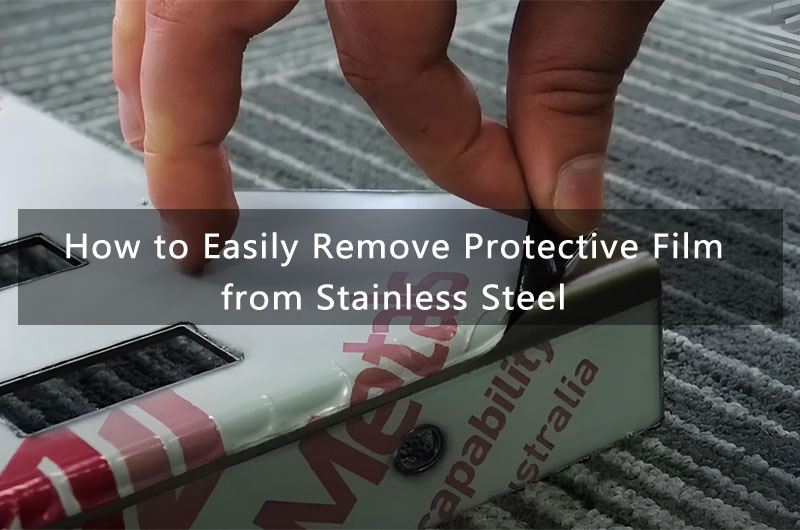
- Temporary films: Designed for clean removal, leaving no residue or surface damage
- Permanent films: Not intended for removal; removal may require tools, heat, or solvents
This makes temporary films ideal for sensitive surfaces such as polished metals, coated glass, and electronic displays.
Cost Consideration
- Temporary films: Lower upfront cost, but replaced frequently
- Permanent films: Higher initial cost, but long-term value
The cost decision depends on whether protection is needed temporarily or continuously.
5. How to Choose the Correct One?
Choose Temporary Protective Film When:
- Protection is needed only during production or transport
- The surface must remain unchanged after removal
- Frequent replacement or updates are required
- The project involves short timelines or phased work
Typical industries:
- Construction
- Metal fabrication
- Electronics manufacturing
Temporary solutions are ideal when flexibility and removability are priorities.
Choose Permanent Protective Film When:
- Long-term protection is essential
- The surface is exposed to harsh environments
- Maintenance and replacement should be minimized
- The film can become part of the final product
Typical industries:
- Automotive
- Architecture
- Consumer electronics
- Industrial equipment
Permanent films are best for durability, longevity, and performance stability.
6. Conclusion
Temporary and permanent protective films are both essential tools in modern manufacturing and surface protection, but they serve fundamentally different purposes.
- Temporary protective films provide flexible, short-term protection with easy removal.
- Permanent protective films deliver long-lasting durability and become part of the product itself.