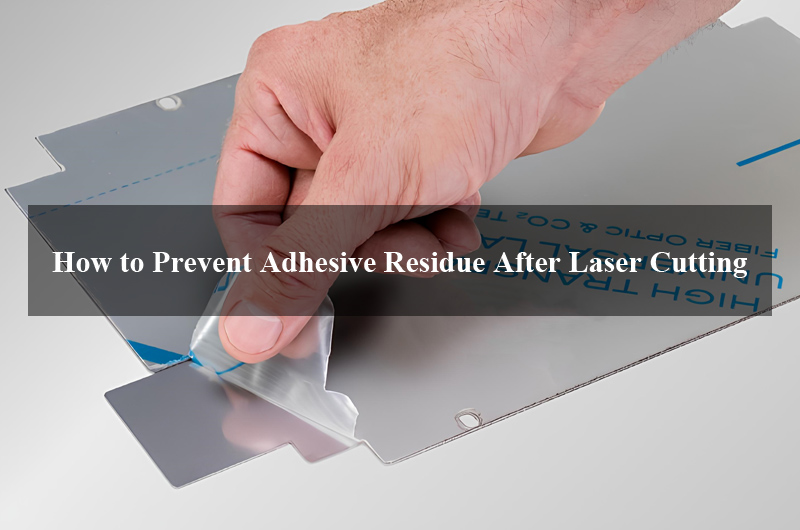
Adhesive residue is one of the most common problems in laser cutting applications involving protective film.
After processing, manufacturers may find sticky adhesive traces remaining on metal surfaces. This issue not only affects product appearance but also increases cleaning time, labor costs, and production delays.
This article explains the main causes of adhesive residue after laser cutting and provides practical solutions to improve surface quality and production efficiency.
What Causes Adhesive Residue During Laser Cutting?
Protective film is designed to temporarily protect metal surfaces during fabrication, transportation, and processing. However, during laser cutting, the film and adhesive are exposed to extremely high temperatures.
If the protective film is not properly designed for laser processing, the adhesive may soften, degrade, or transfer onto the metal surface.
Several factors can contribute to adhesive residue problems.
1. Excessive Heat During Cutting
Heat is the primary cause of adhesive residue.
Modern fiber laser systems generate concentrated thermal energy near the cutting edge. Under high temperatures, unstable adhesive systems may partially melt and bond permanently to the metal surface.
This issue becomes more serious in:
- High-power fiber laser cutting
- Thick metal sheet processing
- Slow cutting speeds
- Continuous industrial production
Heat accumulation near the cutting line can significantly increase the risk of adhesive transfer.
2. Incorrect Adhesion Level
Adhesion strength plays a critical role in clean removability.
If the adhesive level is too high, the adhesive may become difficult to remove after exposure to laser heat.
Excessively aggressive adhesive systems often cause:
- Sticky residue
- Difficult peeling
- Surface contamination
- Film tearing
On the other hand, if adhesion is too low, the film may lift or bubble during cutting.
Choosing the correct peel force is essential for balancing stability and clean removal.
3. Low-Quality Adhesive Formulation
The quality of the adhesive system directly affects laser cutting performance.
General-purpose protective films often use adhesive formulations intended for packaging or transportation protection rather than high-temperature industrial processing.
Under laser exposure, low-quality adhesives may:
- Carbonize
- Soften excessively
- Leave residue
- Produce smoke
- Lose adhesion stability
Professional laser cutting protective films typically use specially formulated acrylic pressure-sensitive adhesives designed for thermal resistance and clean removability.
4. Improper Film Thickness
Film thickness can also influence adhesive residue performance.
Extremely thin films may not provide sufficient thermal protection, causing heat to transfer more rapidly into the adhesive layer.
In contrast, overly thick films may trap heat around the cutting area, increasing adhesive degradation.
Selecting the proper film thickness helps improve heat resistance and reduce residue risk.
5. Long Storage Time or Harsh Environment
Environmental conditions can affect adhesive behavior before laser cutting even begins.
Factors such as:
- High storage temperature
- Humidity
- UV exposure
- Long storage periods
may increase adhesive aging and make clean removal more difficult after processing.
Protective film should be stored under controlled conditions to maintain stable performance.
How to Prevent Adhesive Residue After Laser Cutting
1. Use Laser-Specific Protective Film
The most effective solution is choosing protective film specifically designed for laser cutting applications.
Laser-grade protective films are engineered to provide:
- Heat resistance
- Stable adhesion
- Low residue performance
- Easy peeling after cutting
These films perform much better under high-power fiber laser conditions compared with standard protection films.
2. Select Heat-Resistant Acrylic Adhesives
Adhesive formulation is one of the most important factors in residue prevention.
High-performance acrylic pressure-sensitive adhesives offer:
- Better thermal stability
- Reduced adhesive transfer
- Cleaner removal
- Consistent adhesion
Water-based acrylic adhesive systems are increasingly preferred because they provide excellent environmental performance and cleaner processing behavior.
3. Optimize Adhesion Strength
Different metal surfaces require different adhesion levels.
For example:
- Mirror stainless steel may require lower adhesion
- Textured aluminum may require stronger adhesion
- Decorative panels often need clean-removal adhesives
Customized peel force helps ensure the film remains stable during cutting while still allowing easy removal afterward.
3. Match Film to Laser Power
Laser power significantly affects protective film performance.
As fiber laser systems move from 3kW to 6kW, 12kW, or higher, heat exposure increases dramatically.
Higher-power systems typically require:
- More heat-resistant film structures
- Stable adhesive systems
- Optimized film thickness
Using standard film under high-power laser conditions often results in adhesive residue problems.
4. Optimize Laser Processing Parameters
Improper machine settings can increase thermal stress and worsen residue issues.
Manufacturers should optimize:
- Cutting speed
- Laser power
- Focus position
- Assist gas settings
- Cutting path design
Reducing unnecessary heat accumulation near the cutting edge can significantly improve clean removability.
5. Remove Film Promptly After Cutting
Leaving protective film on processed metal surfaces for extended periods may increase adhesive bonding over time.
For best results:
- Remove film soon after processing
- Avoid prolonged high-temperature exposure
- Store processed materials properly
Prompt removal helps maintain clean surface appearance.