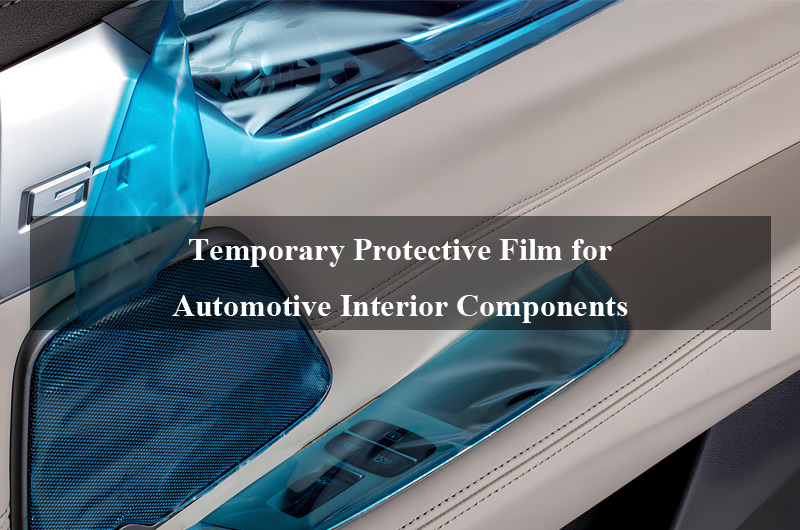
Automotive interior parts are highly vulnerable to scratches, dust, fingerprints, and surface damage during manufacturing, assembly, transportation, and installation.
To solve these challenges, temporary protective films are widely used on automotive interior components.
These films provide reliable surface protection while allowing clean and easy removal before the vehicle reaches the customer.
Why Automotive Interior Components Need Protective Films
Automotive interior parts often feature delicate and decorative surfaces that require high-level protection.
Common risks during production and handling include:
- Scratches during assembly
- Dust contamination
- Fingerprints
- Abrasion during transportation
- Surface damage from tools or packaging
- Chemical contamination
Without proper protection, damaged components may lead to:
- Increased rejection rates
- Higher rework costs
- Delayed production schedules
- Reduced customer satisfaction
Temporary protective films help manufacturers maintain consistent product quality while reducing operational losses.
Common Automotive Interior Components That Use Protective Films
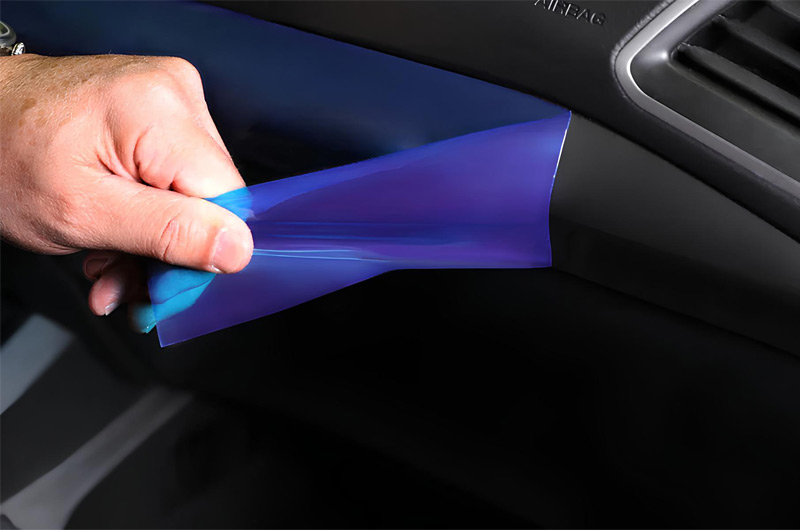
Temporary protective films are widely applied to many automotive interior parts, including:
- Dashboard panels
- Piano black trims
- Center console surfaces
- Navigation displays
- Instrument clusters
- Decorative aluminum trims
- Touchscreen panels
- Door sill plates
- Interior plastic panels
- Wood grain decorative parts
These components often have sensitive surfaces that can easily show scratches or marks.
Key Requirements for Automotive Interior Protective Films
Automotive applications demand high-performance protective films because interior parts are often expensive and visually critical.
1. Clean Removability
One of the most important requirements is residue-free removal.
The film must peel off cleanly without:
- Adhesive residue
- Glue transfer
- Surface staining
- Damage to coatings
This is especially important for high-gloss and decorative surfaces.
Automotive manufacturers usually require stable adhesive performance even after long storage periods.
2. Stable Adhesion
The protective film must provide sufficient adhesion to stay securely attached during:
- Manufacturing
- Transportation
- Warehouse storage
- Vehicle assembly
However, the adhesive should not be too aggressive.
Excessive adhesion may cause:
- Difficult peeling
- Surface damage
- Residue problems
Therefore, balanced adhesive strength is critical.
3. Scratch and Abrasion Resistance
Automotive interior parts frequently come into contact with:
- Tools
- Gloves
- Packaging materials
- Assembly equipment
Protective films must resist scratches and abrasion to maintain the appearance of the substrate.
High-durability films are often preferred for transportation and assembly-line applications.
4. Heat Resistance
Automotive manufacturing environments may involve elevated temperatures.
For example:
- Interior parts may be stored in hot warehouses
- Vehicles may experience high cabin temperatures during transportation
- Some components undergo thermal processing
Poor heat resistance can cause:
- Adhesive softening
- Film deformation
- Residue issues
Heat-resistant protective films help ensure stable performance under these conditions.
5. Compatibility with Sensitive Surfaces
Modern automotive interiors use a wide variety of materials, including:
- PC plastic
- ABS plastic
- PMMA
- Decorative coatings
- Painted surfaces
- Electroplated trims
Each material has different surface energy and sensitivity.
The protective film must be compatible with the specific substrate to avoid:
- Chemical reactions
- Surface marks
- Coating damage
- Gloss changes
Thorough testing is necessary before large-scale implementation.
Types of Protective Films Used in Automotive Interiors
Several types of protective films are commonly used in the automotive industry.
PE Protective Films
PE (Polyethylene) films are widely used because they offer:
- Good flexibility
- Stable adhesion
- Cost-effectiveness
- Easy processing
They are suitable for many standard interior applications.
PET Protective Films
PET films provide:
- Higher transparency
- Better dimensional stability
- Improved scratch resistance
They are often used for:
- Display screens
- Touch panels
- High-gloss decorative surfaces
Conclusion
Temporary protective films play a critical role in protecting automotive interior components throughout manufacturing, transportation, and assembly processes.
To meet the demanding standards of the automotive industry, protective films must provide:
- Stable adhesion
- Clean removability
- Scratch resistance
- Heat resistance
- Compatibility with sensitive surfaces
Selecting the right protective film solution not only protects valuable interior components but also improves overall manufacturing quality and operational efficiency.