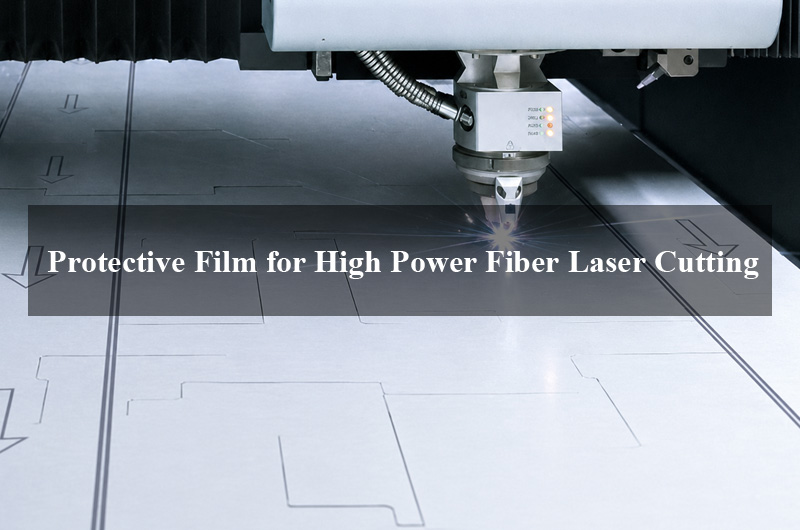
Modern fiber laser machines operating at 6kW, 12kW, 20kW, or even higher power levels provide faster cutting speeds, improved efficiency, and superior cutting precision.
However, higher laser power also creates new challenges for surface protection during processing. Standard protective films often fail under extreme thermal conditions, leading to burning, adhesive residue, edge lifting, or difficult peeling after cutting.
For manufacturers processing metal sheets, selecting the right protective film for high-power fiber laser cutting is essential for maintaining surface quality and production efficiency.
Why High Power Fiber Laser Cutting Requires Specialized Protective Film
High-power fiber lasers generate extremely concentrated energy. Compared with traditional CO2 laser systems, fiber lasers produce:
- Higher energy density
- Faster cutting speeds
- More localized heat
- Greater thermal stress near cutting edges
These conditions place significant demands on the protective film.
During cutting, the film must withstand:
- Intense heat exposure
- Metal surface expansion
- Smoke and sparks
- Mechanical stress
- Continuous production cycles
General-purpose protective films designed for transportation or storage protection are usually not suitable for these applications.
Key Features of Protective Film for High Power Fiber Laser Cutting
To perform effectively under extreme processing conditions, laser cutting protective films must offer specialized performance characteristics.
Excellent Heat Resistance
Heat resistance is one of the most important requirements.
High-quality laser cutting films are designed to tolerate elevated temperatures generated during:
- 6kW fiber laser cutting
- 12kW laser processing
- Continuous industrial operation
Heat-resistant film structures help reduce:
- Burning
- Carbonization
- Adhesive degradation
Stable Acrylic Adhesive System
The adhesive system directly affects cutting performance.
High-performance films often use specially formulated acrylic pressure-sensitive adhesives that provide:
- Stable adhesion
- Low residue
- Heat resistance
- Easy removal
- Consistent coating performance
Water-based acrylic adhesives are increasingly preferred because they offer cleaner processing and lower VOC emissions.
Controlled Adhesion Levels
Protective film adhesion must be carefully balanced.
If adhesion is too high:
- Residue may remain after cutting
- Peeling becomes difficult
If adhesion is too low:
- Film lifting may occur
- Surface protection becomes unstable
Customized peel force helps ensure optimal performance for different metal surfaces and laser conditions.
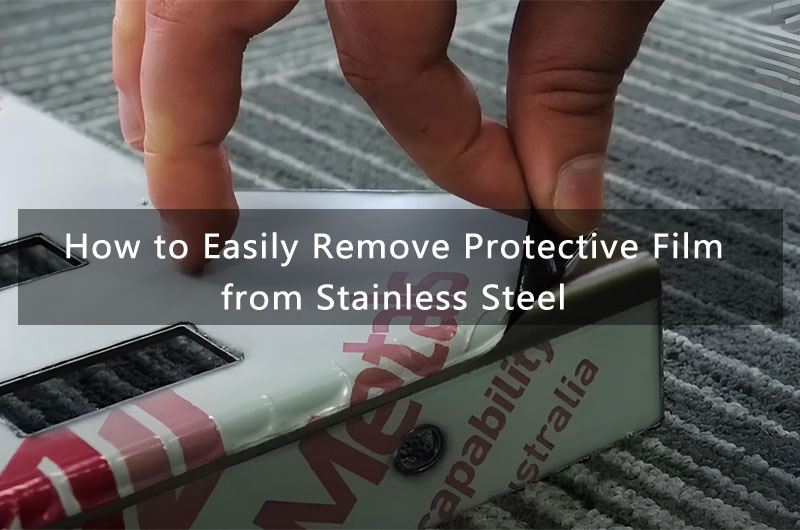
Clean Removal After Cutting
Easy removal after processing is critical in industrial production.
High-quality laser cutting protective films should peel cleanly without:
- Adhesive transfer
- Film tearing
- Surface staining
This is especially important for decorative and premium metal applications.
Compatibility with Fiber Laser Systems
Not all protective films are compatible with fiber laser technology.
Professional laser cutting films should be specifically designed for:
- High-power fiber laser machines
- High-speed processing
- Precision metal cutting
- Automated production lines
Best Materials for High Power Laser Cutting Film
PE Protective Film
PE protective film is widely used in laser cutting applications because it offers:
- Good flexibility
- Stable protection
- Cost efficiency
- Easy application
Special heat-resistant PE films are commonly used for stainless steel and aluminum laser cutting.
PET Protective Film
PET protective film provides:
- Higher temperature resistance
- Better dimensional stability
- Improved tensile strength
PET films are suitable for demanding industrial applications where thermal stability is critical.
Recommended Film Thickness for High Power Fiber Laser Cutting
Film thickness significantly affects thermal performance.
For high-power laser systems, protective film thickness is typically selected within the range of:
- 80–120 microns
Benefits of thicker films include:
- Better heat resistance
- Improved durability
- Reduced burn risk
- Enhanced scratch protection
However, excessively thick films may interfere with cutting precision if not properly optimized.
How to Choose the Right Protective Film
When selecting protective film for high-power fiber laser cutting, manufacturers should evaluate several factors:
Laser Power
Higher power systems require stronger heat resistance.
Metal Type
Different surfaces require different adhesion levels and film structures.
Surface Finish
Mirror surfaces and decorative finishes often require cleaner removability.
Processing Conditions
Factors such as:
- Cutting speed
- Assist gas
- Production temperature
- Storage conditions
can all influence film performance.
Conclusion
High-power fiber laser cutting places extreme demands on protective films. Standard surface protection materials often cannot withstand the thermal stress generated during modern laser processing.
A high-performance laser cutting protective film should provide:
- Excellent heat resistance
- Stable acrylic adhesive performance
- Controlled adhesion
- Clean removal
- Compatibility with high-power fiber laser systems