Laser cutting protective film plays a critical role in protecting metal surfaces from scratches, dust, fingerprints, and processing damage during fabrication.
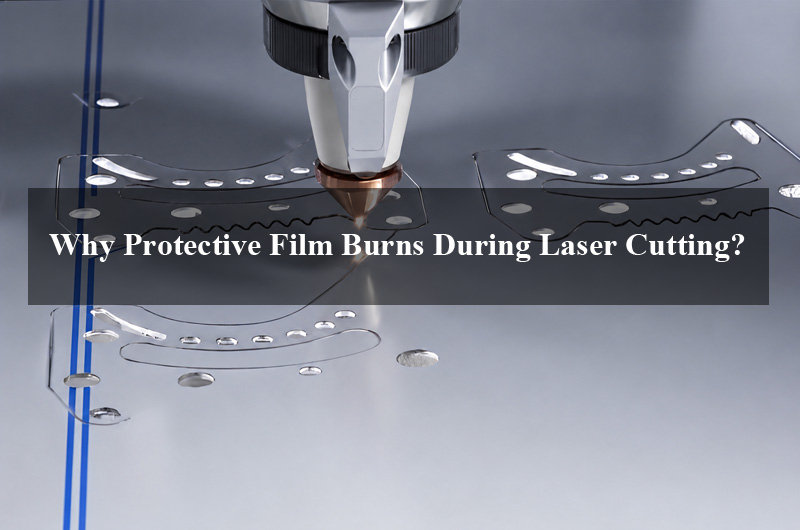
However, many manufacturers encounter a common issue during processing: the protective film burns, melts, carbonizes, or leaves adhesive residue around the cutting area.
This problem is especially common in stainless steel laser cutting, aluminum processing, and high-power fiber laser applications. Burned film not only affects surface quality but also increases cleaning costs, reduces production efficiency, and may even damage the final product appearance.
What Happens When Protective Film Burns?
During laser cutting, the laser beam generates extremely high localized temperatures. Although the laser is focused on the metal surface, heat can spread to the surrounding area and affect the protective film.
When the film cannot tolerate the thermal stress generated during processing, several problems may occur:
- Film melting
- Edge carbonization
- Adhesive transfer
- Difficult peeling
- Smoke residue
- Bubble formation
- Film shrinkage
- Surface contamination
These issues are particularly noticeable in decorative stainless steel, mirror-finish metals, and coated aluminum sheets where surface appearance is critical.
Main Reasons Why Protective Film Burns During Laser Cutting
1. Insufficient Heat Resistance
One of the most common causes is poor heat resistance of the film substrate or adhesive system.
Standard protective films designed for transportation or storage may not withstand the high temperatures generated during laser processing. Under intense heat exposure, the film may soften, melt, or carbonize around the cutting edge.
This problem becomes more severe in:
- High-power fiber laser cutting
- Thick metal sheet processing
- Continuous high-speed production
- Small cutting geometries with concentrated heat
For laser cutting applications, protective films must be specifically engineered with heat-resistant materials and adhesives.
2. Incorrect Adhesion Level
Adhesion level plays a major role in laser cutting performance.
If the adhesive strength is too high, the adhesive may soften under heat and transfer onto the metal surface. This often leads to residue after peeling.
If the adhesion is too low, the film may lift, shrink, or bubble during cutting, exposing the metal surface and causing inconsistent protection.
Selecting the proper peel force depends on:
- Metal type
- Surface finish
- Cutting temperature
- Laser power
- Storage conditions
For example, decorative stainless steel usually requires moderate adhesion with clean removability after processing.
3. High Laser Power
Modern fiber laser machines commonly operate at 3kW, 6kW, 12kW, or even higher power levels. Higher power improves cutting speed and efficiency but also increases thermal stress on the protective film.
Under high-power conditions, low-quality films may experience:
- Burn marks around the cut line
- Edge lifting
- Adhesive degradation
- Film brittleness
- Carbon deposits
Many standard PE protective films are not suitable for high-power laser systems unless specially formulated for laser processing applications.
4. Poor Adhesive Formulation
The adhesive system is often the hidden factor behind burning issues.
Low-quality adhesives may contain unstable components that degrade rapidly under laser heat. Some solvent-based adhesives can produce smoke, odor, or carbonization during processing.
High-performance laser cutting films typically use specially developed acrylic pressure-sensitive adhesives designed for:
- Heat resistance
- Clean removal
- Stable adhesion
- Low residue
- Low VOC emissions
Water-based acrylic adhesive systems are increasingly preferred because they provide better environmental performance and cleaner processing results.
5. Film Thickness Is Not Suitable
Film thickness directly affects heat resistance and cutting stability.
Thin films may shrink or melt more easily during laser exposure, while excessively thick films may interfere with cutting precision or edge quality.
Choosing the correct thickness depends on:
- Metal material
- Surface finish
- Laser power
- Cutting speed
- Application environment
In many laser cutting applications, medium-thickness PE films provide a balance between protection and thermal stability.
6. Poor Quality Film Materials
Not all protective films are designed for industrial laser cutting.
General-purpose protection films intended for transportation or temporary storage may fail during processing because they lack:
- Thermal stability
- Consistent coating quality
- Uniform adhesion
- Laser compatibility
Industrial laser cutting requires specialized protective films with stable production quality and controlled adhesive performance.
7. Improper Processing Parameters
Sometimes the issue is not the film itself but the cutting conditions.
Improper laser settings can generate excessive heat accumulation near the cutting edge. Common causes include:
- Slow cutting speed
- Incorrect focal position
- Excessive laser power
- Poor assist gas settings
- Repeated cutting paths
Optimizing processing parameters can significantly reduce film burning problems.
How to Prevent Protective Film Burning During Laser Cutting
Use Laser-Specific Protective Film
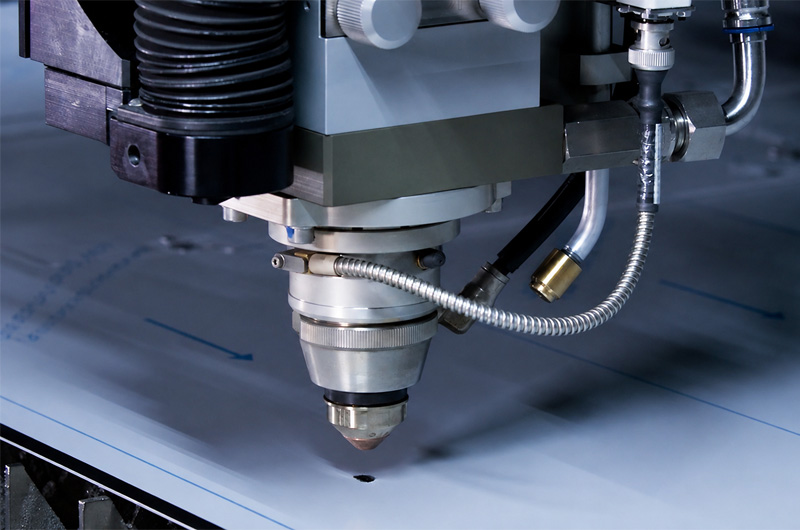
The most effective solution is selecting a protective film specifically developed for laser cutting applications.
These films are engineered to withstand:
- High temperatures
- Fiber laser processing
- Long production cycles
- Complex cutting geometries
Laser-grade protective films typically offer better thermal resistance and cleaner removal performance.
Choose the Right Adhesion Level
Adhesion should be customized according to the application.
Different surfaces require different peel strengths:
- Mirror stainless steel
- Brushed stainless steel
- Aluminum sheets
- Galvanized steel
- Decorative metal panels
Customized adhesion helps reduce residue and improve cutting stability.
Select Heat-Resistant Acrylic Adhesives
High-quality acrylic PSA systems offer superior performance during laser processing.
Advantages include:
- Stable adhesion under heat
- Lower residue risk
- Better aging resistance
- Cleaner peeling
- Reduced carbonization
Water-based acrylic adhesives are particularly suitable for environmentally conscious industrial applications.
Match Film to Laser Power
Higher laser power requires more heat-resistant film structures.
A protective film suitable for 1kW cutting may fail under 12kW fiber laser conditions. Manufacturers should evaluate:
- Laser type
- Power level
- Cutting speed
- Sheet thickness
before selecting film specifications.
Test Before Mass Production
Every laser cutting environment is different.
Before full-scale production, manufacturers should perform testing under actual processing conditions to verify:
- Heat resistance
- Peeling performance
- Residue behavior
- Surface protection quality
This helps avoid costly production issues later.
Conclusion
Protective film burning during laser cutting is usually caused by a combination of heat, adhesive instability, improper adhesion, and unsuitable film materials.
A high-performance laser cutting protective film should provide:
- Excellent heat resistance
- Stable adhesion
- Clean removability
- Low residue
- Compatibility with fiber laser systems