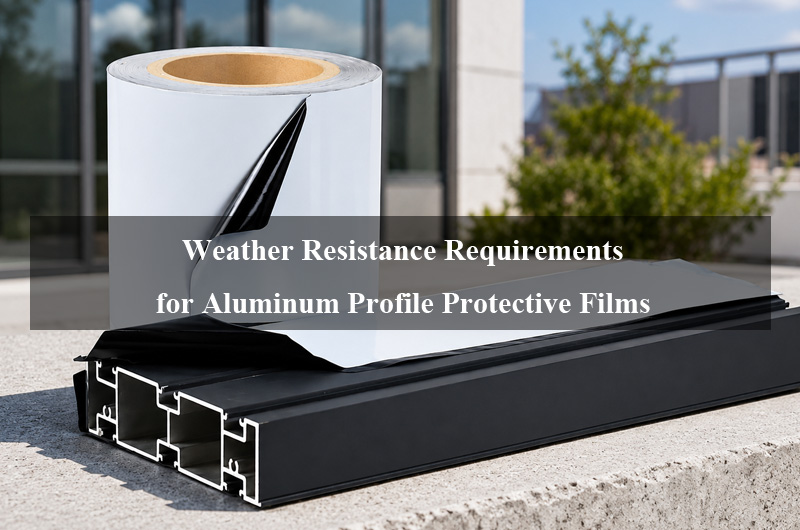
Among the many performance factors of protective films, weather resistance is one of the most important—especially for aluminum profiles used in outdoor environments or exposed to long transportation and storage periods.
Poor weather resistance can lead to adhesive residue, difficult film removal, surface contamination, and increased production costs.
What Is Weather Resistance in Protective Films?
Weather resistance refers to the ability of a protective film to maintain stable physical and adhesive performance when exposed to environmental conditions such as:
- UV radiation
- High temperatures
- Humidity
- Rain and moisture
- Temperature fluctuations
- Outdoor exposure
A weather-resistant protective film should remain stable throughout the application period and allow clean removal without leaving residue or damaging the aluminum surface.
Why Weather Resistance Matters for Aluminum Profiles
Aluminum profiles are commonly used in outdoor architectural applications such as:
- Windows and doors
- Curtain walls
- Solar panel frames
- Building facades
- Outdoor railings
These products may be exposed to sunlight and changing weather conditions for weeks or even months before installation is completed.
If the protective film does not have sufficient weather resistance, several problems may occur:
- Adhesive residue after peeling
- Film aging and cracking
- Edge lifting
- Difficulty removing the film
- Surface discoloration
- Increased cleaning and labor costs
For manufacturers and contractors, these issues can affect product appearance, customer satisfaction, and project efficiency.
Key Weather Resistance Requirements
1. UV Resistance
UV resistance is one of the most critical properties for aluminum profile protective films.
Continuous exposure to ultraviolet radiation can cause the adhesive layer to degrade and become overly aggressive. This may result in adhesive transfer or residue remaining on the aluminum surface after film removal.
A high-quality weather-resistant film should:
- Resist UV degradation
- Maintain stable adhesive strength
- Prevent adhesive hardening
- Allow clean removal after outdoor exposure
For outdoor aluminum applications, UV-resistant films are strongly recommended.
2. Temperature Resistance
Aluminum profiles are often exposed to high temperatures during transportation, storage, or processing.
In hot environments, low-quality films may experience:
- Adhesive softening
- Film deformation
- Increased tackiness
- Glue residue problems
In cold environments, films may become brittle and difficult to remove.
An ideal protective film should retain consistent performance over a broad temperature range.
3. Humidity and Moisture Resistance
Humidity can significantly affect adhesive behavior.
In environments with high moisture levels, poor-quality protective films may suffer from:
- Reduced adhesion
- Edge lifting
- Bubble formation
- Water penetration
Protective films used for aluminum profiles should have strong resistance to moisture and maintain stable adhesion even in humid environments or during overseas shipping.
This is especially important for marine transportation and outdoor storage applications.
4. Aging Resistance
Long-term exposure to environmental conditions can accelerate adhesive aging.
Aging may cause:
- Difficult peeling
- Film tearing
- Adhesive residue
- Surface contamination
High-performance protective films are designed with aging-resistant adhesive systems that maintain removability even after extended application periods.
Manufacturers should carefully evaluate the expected exposure duration before selecting a protective film.
Choosing the Right Protective Film for Aluminum Profiles
Different aluminum surfaces require different protective film solutions.
Factors to consider include:
- Surface finish (anodized, brushed, polished, powder-coated)
- Indoor or outdoor application
- Exposure duration
- Processing conditions
- Transportation environment
For example:
- High-gloss aluminum surfaces usually require low-tack films
- Outdoor architectural profiles need UV-resistant films
- Deep-processing applications may require thicker films with higher durability
Testing film compatibility before mass application is highly recommended.
Common Problems Caused by Poor Weather Resistance
Using a protective film with insufficient weather resistance may lead to several common issues:
| Problem | Possible Cause |
|---|---|
| Adhesive residue | UV degradation or excessive heat |
| Difficult film removal | Adhesive aging |
| Edge lifting | Humidity or poor adhesion |
| Surface contamination | Low-quality adhesive system |
| Film cracking | Poor temperature resistance |
Understanding these risks can help manufacturers avoid unnecessary losses and improve product quality.